Monday, December 31, 2007

Some thoughts on the darkness

New Years is a great time for reflecting back and looking forward. As I do a bit of that today, its clear that the last year has been one of darkness. But, as the poet David Whyte says, there is a place for darkness - even a sweetness.


Sweet Darkness by David Whyte

When your eyes are tired
the world is tired also.

When your vision has gone
no part of the world can find you.

Time to go into the dark
where the night has eyes
to recognize its own.

There you can be sure
you are not beyond love.

The dark will be your womb
tonight.

The night will give you a horizon
further than you can see.

You must learn one thing:
the world was made to be free in.

Give up all the other worlds
except the one to which you belong.

Sometimes it takes darkness and the sweet
confinement of your aloneness
to learn

anything or anyone
that does not bring you alive

is too small for you.


I know that in this dark hour, I have found new depth and meaning in many of the day-to-day tasks to which I have devoted myself. And I think I see the world more clearly now than I ever did when I thought there was light.

Sometimes I wonder if we are preparing to change things for the better or to survive as things get worse. Lately I have found wonderful solace in the words below. They have been attributed to Hopi Elders, but that is in dispute. No matter their source, I think they hold great wisdom.

You have been telling the people that this is the Eleventh Hour.
Now you must go back and tell the people that this is The Hour.

Here are the things that must be considered:

Where are you living?
What are you doing?
What are your relationships?
Are you in right relation?
Where is your water?
Know our garden.
It is time to speak your Truth.
Create your community.
Be good to each other.
And do not look outside yourself for the leader.

This could be a good time!

There is a river flowing now very fast.
It is so great and swift that there are those who will be afraid.
They will try to hold on to the shore.
They will feel like they are being torn apart, and they will suffer greatly.

Know the river has its destination.
The elders say we must let go of the shore, push off toward the middle of
the river,
keep our eyes open, and our heads above the water.

See who is there with you and celebrate.

At this time in history, we are to take nothing personally,
least of all ourselves!
For the moment we do, our spiritual growth and journey comes to a halt.

The time of the lonely wolf is over.
Gather yourselves!

Banish the word struggle from your attitude and vocabulary.

All that we do now must be done in a sacred manner and in celebration.

We are the ones we have been waiting for.


I know that the idea of letting go of the shore and banishing the word "struggle" feel like an impossibility right now with so many in pain. But don't most of our sacred teachings say the same thing? How are we going to bring the light if we spend all our time focusing on the darkness? There is some ancient mystery in the idea of surrender that seems to open up possibilities that otherwise would not appear.

I think this "shore" that we need to let go of is the one that keeps insisting that gaining power in the traditional ways it's been held will somehow enable us to make things better. Maybe the flow of the river can teach us more about how to be responsive to and responsible for each other - in a way we haven't seen before.

Our Native brothers and sisters have alot to teach us in how to weather the storm. In their generosity, they continue to share their wisdom ... if we'll listen.

Saturday, December 29, 2007

Peeling the onion

Lately I've been reflecting a bit about my own journey to understand and undo racism in my life. I was steeped in it - growing up mostly in east Texas where the lines dividing "us and them" were drawn clearly and never crossed. I remember a few years ago I pulled out my old high school year book. I grew up in a small town (about 20,000 at the time) and we had two high schools - one white and one black. As I looked at my yearbook I was stunned to see that there were black students who went to my "white" school. It shames me to no end that I NEVER SAW them.

But don't worry, my plan is not to take you step by step through this long journey I continue to be on, but simply to talk a bit about the fact that it is a journey. I think the classic metaphor of peeling an onion one layer at a time is very apt in this instance.


Perhaps there are people who have some kind of enlightened moment when they wake up all of the sudden to discard their own racism. But I'd be skeptical of anyone who claimed that kind of experience.

I began to wonder if there is some kind of generalized path that this journey tends to take. And was particularly intrigued a few months ago to learn about a theory developed by Dr. Milton Bennett called The Developmental Model of Intercultural Sensitivity.

He posits 6 stages of development, the first three being "ethnocentric" and the last three being "ethnorelative". The following description of these stages is taken from pdf files located at The Intercultural Communication Institute.


Ethnocentric

1. Denial of cultural difference is the state in which one’s own culture is experienced as the only real one. Other cultures are avoided by maintaining psychological and/or physical isolation from differences.


The fact that I didn't even see the African American students in my high school would indicate I was at this stage.

2. Defense against cultural difference is the state in which one’s own culture (or an adopted culture) is experienced as the only good one. The world is organized into “us and them,” where “we” are superior and “they” are inferior.


This is where people with the most blatant type of racism would fit - those who openly criticize other races/cultures.

But there are also those in this stage who have rejected their own culture and see it as only negative - valueing another culture(s) as superior to their own.

3. Minimization of cultural difference is the state in which elements of one’s own cultural world view are experienced as universal.


At this stage people talk about the idea that we can be a "colorblind" society and tend to minimize the different experience of people of color.

Ethnorelative

4. Acceptance of cultural difference is the state in which one’s own culture is experienced as just one of a number of equally complex worldviews. Acceptance does not mean agreement—cultural difference may be judged negatively—but the judgment is not ethnocentric.


At acceptance, a person has seen that there are very real differences in culture and in the experiences of persons of color in this culture.

5. Adaptation to cultural difference is the state in which the experience of another culture yields perception and behavior appropriate to that culture. One’s worldview is expanded to include constructs from other worldviews.


A person in adaptation might say: "To solve this dispute, I'm going to have to change my approach."

6. Integration of cultural difference is the state in which one’s experience of self is expanded to include the movement in and out of different cultural worldviews. People at Integration often are dealing with issues related to their own “cultural marginality.” It is common among non-dominant minority groups, long-term expatriates, and “global nomads.”


As I look at these stages, I think most conflicts in the progressive blogosphere about racism have to do with the difference between stages 3 and 4 - from minimization to acceptance. That's just my take on it - others may disagree. And I think the move from minimization to acceptance has to at least incorporate the acknowledgement of the limits of one's own cultural experiences and an attempt to see the differences with others. For me this has often meant hearing the experience of people of color as being different from my own - and not generalizing my experience to them. This song by Tracy Chapman is perhaps as good of an illustration of that as you'll find.

There is fiction in the space between
you and me.


Thursday, December 27, 2007

Three Cups of Tea

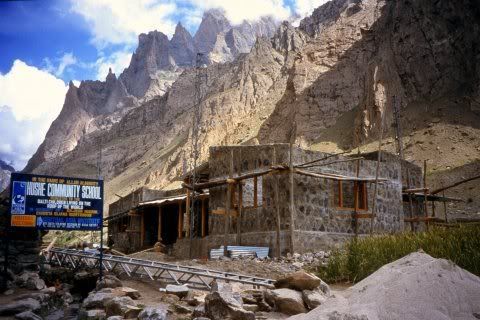
All the news about Pakistan today in the wake of the assassination of Benazir Bhutto made me think about a book I read a while ago titled Three Cups of Tea: One Man's Mission to Promote Peace...One School at a Time by Greg Mortenson and David Oliver Relin.

Photobucket

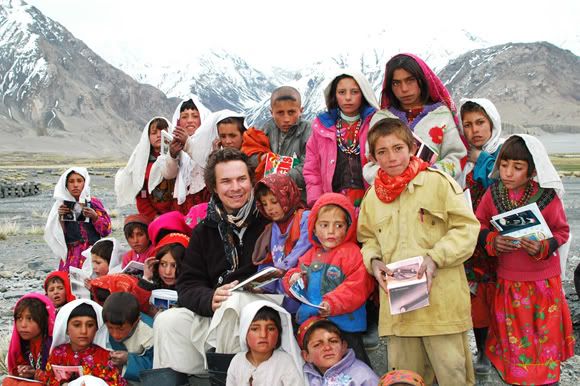
Greg Mortenson was a nurse by profession and a mountain-climber by passion. He attempted to climb K2, but was unsuccessful. After several mishaps, he found himself alone on his descent and almost died. He was taken in by the people of Korphe, a small village in the Pakistani mountains, and nursed to health. Greg promised to repay the people of Korphe by coming back to build them a school. When he returned to the US, he sold all of his possessions and dedicated himself to raising the small amount of money he needed to build the school. Within a couple of years it was done.


The process eventually led Greg to start the Central Asia Institute, which has gone on to build over 55 schools and several women's vocational centers and water projects in Pakistan and Afghanistan. His passion now is all about spreading education, especially for girls, as a way to build up the people of the region and combat terrorism. In the course of this work, he has been kidnapped by mullahs, held and questioned by the CIA, and had fatwas issued against him. But the goodwill of the people he has worked with has always been there to protect him.

One of the things Mortenson laments is that less that 1/3 of the money the US promised to Afghanistan for re-building has been spent there. I just can't imagine the mind that fails to grasp why our efforts in that country have been such a complete failure.

Here's a little excerpt from an article about Mortenson and his work from the St. Paul Pioneer Press:

The title of the book, "Three Cups of Tea," refers to the way business is done in the tribal areas where the Taliban has sought refuge. The first cup of tea is to get acquainted, the second to make friends, and the third is to do business -- over months or years.

It's a contrast to the fast-paced American style of business through teleconferencing, e-mails and instant messaging.

As America struggles against terrorism, he said, it fails to understand the "Three Cups of Tea" style of negotiating, and the power of tribalism.

He scoffs at efforts to generate democracy overnight.

"We're trying to plug in democracy," Mortenson said. "You can't do that. You can't just tell people to vote. You have to put in education, and land ownership."

"It takes two generations," Mortenson said -- and a whole lot of tea.
I don't know about you, but I'm ready to propose a "Department of Tea Drinking" that will be devoted to talking, listening, building up and problem-solving. I know the reaction this would get from the DC crowd. But I continue to hope for the day we'll be ready to try something that promotes life rather than death.

Tuesday, December 25, 2007

Pax, Libby and Me

I have posted pictures of my little sweetie Pax here before. But just in case you haven't seen them, here she is.


Pax is a one year old teacup shih tzu and weighs in at just about 4 pounds. I brought her home just about a year ago, which was six months after I'd had to say goodbye to my buddy Henry the beagle.


I got Henry at the humane society where he'd shown up as a runaway (typical beagle). He was a bit fiesty and had that obnoxious beagle "bark/howl" so people were mostly a bit stand offish with him. I got no end of crap from my neighbors if he was ever outside long enough to unleash that howl.

But Henry was my cuddle buddy. You know, that kind of dog that needs to sleep with you with his body stretched out with contact from his nose to his tail. No matter where I settled, on the couch, on the floor, or in bed, Henry had to be there all snuggled up beside me.

Its been a year and a half since I had to say goodbye to Henry. His heart finally gave out at about 15. And I still miss him.

But there is another member of my household. Her name is Libby and she's been with me the longest.


Libby was my first dog. I found her at the human society just after I bought my first house. The minute I saw her, I thought she was the most beautiful dog I'd ever seen. She'd been left there by a family with 3 kids when they'd had to move from a house to an apartment. I didn't do my research before looking for a dog and had quite a surprise with Libby. Seems she'd been depressed after being left at the human society. When I got her home and settled, I learned all about the springer spaniel energy! Given that I'm pretty much a couch potato, I worried that we weren't a good fit. But by then I was so in love with her - we had to find a way to make it work. And we did. One of the things I did was toss a tennis ball down the stairs to the basement. She'd run down and back up the stairs with it over and over and over.

But Libby is 17 going on 18 now and doesn't run anymore. She can't even get down the 3 stairs to the landing at my back door to go outside without assistance from me. She's still eating, but doesn't do much else and I'm afraid she's on her last leg.

This holiday season, my whole family is gathered in Texas. I let them know that as long as Libby hangs on, I need to be here with her and keep her as comfortable as possible. So this year, its just Pax, Libby and me for the holidays. But what good company they are!!

Monday, December 24, 2007

The words of Jesus on his birthday

Since tonight we celebrate the birth of Jesus, I thought it might be interesting to take a look at some of the things he stood for during his life. I no longer consider myself a christian, but it's not for lack of trying. I went to church at least 3 times a week growing up, attended a christian high school and college, and finally got my master's degree at a seminary. So sometimes I feel like I've heard just about everything there is to say about Jesus.

But a theology professor of mine at the seminary used to talk regularly about how christians today focus on Jesus' birth and death - but don't talk much about his life in between the two. That's why Christmas is probably the biggest holiday of the year and its also why they LOVED the movie "The Passion of the Christ."

The life of Jesus is where he presented challenges to all of us in showing us how we can live in a way that truly does transform the world. In our power-driven consumer society - those messages go right to the heart of what's wrong with our culture and ask us to live another way.

I also had a professor in college who took his bible and cut out all the verses (old and new testament) that were instructions for us to care for the poor, the widowed and the children. He would hold up that bible in class and show us that there was not much left after all that was taken out in order to make the point that today, we tend to miss the central message.

Most of us have heard the beatitudes. They are perhaps the most powerful summary of what Jesus was trying to teach us:

Blessed are the poor in spirit,
for theirs is the kingdom of heaven.

Blessed are they who mourn,
for they shall be comforted.

Blessed are the meek,
for they shall possess the earth.

Blessed are they who hunger and thirst for justice,
for they shall be satisfied.

Blessed are the merciful,
for they shall obtain mercy.

Blessed are the pure of heart,
for they shall see God.

Blessed are the peacemakers,
for they shall be called sons of God.

Blessed are they who suffer persecution for justice sake,
for theirs is the kingdom of heaven.
And most of us have heard the story of the good samaritan:

On one occasion an expert in the law stood up to test Jesus. "Teacher," he asked, "what must I do to inherit eternal life?" "What is written in the Law?" he replied. "How do you read it?" He answered: " 'Love the Lord your God with all your heart and with all your soul and with all your strength and with all your mind'; and, 'Love your neighbor as yourself.'" "You have answered correctly," Jesus replied. "Do this and you will live." But he wanted to justify himself, so he asked Jesus, "And who is my neighbor?"

In reply Jesus said: "A man was going down from Jerusalem to Jericho, when he fell into the hands of robbers. They stripped him of his clothes, beat him and went away, leaving him half dead. A priest happened to be going down the same road, and when he saw the man, he passed by on the other side. So too, a Levite, when he came to the place and saw him, passed by on the other side. But a Samaritan, as he traveled, came where the man was; and when he saw him, he took pity on him. He went to him and bandaged his wounds, pouring on oil and wine. Then he put the man on his own donkey, took him to an inn and took care of him. The next day he took out two silver coins and gave them to the innkeeper. 'Look after him,' he said, 'and when I return, I will reimburse you for any extra expense you may have.'

"Which of these three do you think was a neighbor to the man who fell into the hands of robbers?"

The expert in the law replied, "The one who had mercy on him." Jesus told him, "Go and do likewise."
I often think of the following passage at christmas and wonder what gift we could give to Jesus on his birthday.

Then the king will say to those good people on his right, 'Come. My Father has given you great blessings. Come and get the kingdom God promised you. That kingdom has been prepared for you since the world was made. You can have this kingdom, because I was hungry and you gave me food to eat. I was thirsty, and you gave me something to drink. I was alone and away from home, and you invited me into your home. I was without clothes, and you gave me something to wear. I was sick, and you cared for me. I was in prison, and you came to visit me.' "Then the good people will answer, 'Lord, when did we see you hungry and give you food? When did we see you thirsty and give you something to drink? When did we see you alone and away from home and invite you into our home? When did we see you without clothes and give you something to wear? When did we see you sick or in prison and care for you?' "Then the king will answer, 'I tell you the truth. Anything you did for one of the least of these my brethren, you also did for me.'
All of these passages call for something deep in our relationships with each other - and that's what makes them so difficult to live out. The christians I grew up around are much more content with rules and dogma that are imposed from the outside as a way to live than they are with these deep truths about humanity.

There's one last story about Jesus that I'd like to share because it addresses this reliance on dogma and Jesus takes a direct hit at that kind of thinking. I have to say that in all the years that I heard thousands of sermons I NEVER heard one on this passage:

And it came to pass that he went through the grain fields on the sabbath day; and his disciples began, as they went, to pluck the ears of grain.

And the Pharisees said unto him, "Behold, why do they on the sabbath day that which is not lawful?"

And he said unto them, "Have ye never read what David did, when he had need, and was hungry, he, and they that were with him; how he went into the house of God in the days of Abiathar, the high priest, and did eat the showbread, which is not lawful to eat but for the priests, and gave also to them who were with him?"

And he said unto them, "The sabbath was made for man, and not man for the sabbath."
What I hear in this story is Jesus saying that the "rules" are negotiable. What's not negotiable is the dignity of every human being, and that, ultimately, trumps all the rules.

At this time of year, I usually go back and read an amazing diary written by the wonderful soul Kid Oakland about three years ago titled a christmas message. Here's a taste:

Let me tell you something about the Jesus that I know.

He was a real man. Born in a poor region to working poor parents. He loved learning, he loved his mother and his father.

But he left them and spent his life with the poor, the outcast, the rejected, the defiled, the sick, the sinners, the bedraggled, the bereft, the self-hating, the lonely, the banished, the foul, the miserable, the desperate and finally, those sick with their own power.

He did this, not because of his ideology or his creed. He did this not because of his doctrine. He did this, quite simply, because he loved them. He preferred them.

Their company, their stories, their lives, their environs, their plight and their faith.

And they loved him. Because he touched them. He looked them in the eye and believed in them. Because, at the end of the day, when they looked to him they saw that his commitment to them was a commitment unsullied by qualifier or clause. It was a commitment to love them, even upon pain of death. And they saw in him, a love that promised to love them as they were, who they were...fully, without judgement or flinching glance, or hypocritical accomodation.
As I said before, I don't consider myself a christian, and don't share these passages in an attempt to convert anyone... just to share these stories from a great teacher on his birthday.

Saturday, December 22, 2007

An Open Door

As many around the world are thinking about a little town called Bethlehem and the family that needed refuge there a couple of thousand years ago, I'm thinking about a little town in Southern France called Le Chambon that heard the call of those in need during more recent times.


The story of Le Chambon is written in a book titled Lest Innocent Blood Be Shed by Philip Hallie. It is the story of the people there who were responsible for saving the lives of over 5,000 Jewish refugees - mostly children - during World War II.

I read this book a couple of years ago and have since then found myself thinking about it quite often. It is a powerful story of ordinary people who had a huge impact in the world by living out their values of peace and human dignity in the face of totalinarianism and violence. Many have wondered over the years why a small town like this would take a stand when so many others were choosing to look the other way. Philip Hallie tries to answer that question in his book.

In the mid 1930's Andre and Magda Trocme moved to Le Chambon, as Andre was to become the town's minister. It was the "lived-out" convictions of these two people who influenced the town to open their hearts and doors to those in need.

Andre Trocme was committed to non-violence and is described as holding an agressive celebration of life, which he brought to Le Chambon:

But he did not give it (this celebration of life) to Le Chambon in the way that one gives money to the poor or gifts to friends. Trocme gave his aggressive ethic to them by giving them himself. Aside from the distinction between good and evil, between helping and hurting, the fundamental distinction of that ethic is between giving things and giving oneself. When you give somebody a thing without giving yourself, you degrade both parties by making the receiver utterly passive and by making yourself a benefactor standing there to receive thanks - and even sometimes obedience - as repayment. But when you give yourself, nobody is degraded - in fact, both parties are elevated by a shared joy. When you give yourself, the things you are giving become, to use Trocme's word, feconde (fertile, fruitful). What you give creates new, vigorous life, instead of arrogance on the one hand and passivity on the other.


Prior to the time any refugees were sheltered in Le Chambon, the Trocmes lived out this ethic of the celebration of life and the giving of oneself. Andre led resistance efforts against the Vichy government and preached sermons about it.

As his sermons showed, he believed that if you choose to resist evil, and you choose this firmly, then ways of carrying out that resistance will open up around you.


But Andre was not naive about the evil he was resisting. At one point, he was arrested and questioned by a police captain who "was convinced that anybody who had been arrested was not only guilty of a crime but beneath contempt." Here's how Hallie describes Andre's reaction:

This was a moment Trocme would never forget. In fact, his overnight stay in the police station in Limoges changed his view of mankind. He discovered people like the captain - patriotic, sincere, but above all, severely limited. These people were capable of repeating hate-ridden cliches without any concern for evidence or for the pain of others. Before he entered that police station, he thought the world was a scene where two forces were struggling for power: God and the Devil. From then on, he knew that there was a thrid force seeking hegemony over this world: stupidity... Now and for the rest of his life, he knew that there were some people - indeed, many people - who did not realize what suspicion and hatred were doing to their own minds and to their victims.


Eventually Andre's prediction about a way for carrying out resistance did actually open up. One winter's day Magda heard a knock on her door and answered to find a snowcovered Jewish woman refugee there. And of course, at the potential cost of her life, Magda took her in.

For the rest of the Occupation, Magda Trocme and all the other people of Le Chambon would know that turning somebody away from one's door is not simply a refusal to help; from the point of view of that refugee, your closed door is an instrument of harmdoing, and your closing it does harm... Magda's word to her first refugee, "Naturally, come in, and come in," were part of an ethical action. Ethics, especially the ethics of crisis, or life and death, deals with the lives and deaths of particular human beings.


The image that has stayed with me these last couple of years since reading this book is of that door - the door that Andre said will apprear when you make the firm choice to resist evil. I only hope that, like Magda, I will open that door... when life depends on it.

Blog Voices go MTV - 12/22/07

Will the young people of this country engage in political change? They will if Nezua at The Unapologetic Mexican and Kyle at Citizen Orange have anything to say about it.


These two powerhouse voices of the diversosphere have been chosen by MTV to be part of the Street Team '08 that inlcudes 51 young vloggers that will cover the presidential election through next November.

The presidential candidates can run, but it will be hard for them to hide from the horde of citizen journalists tapped by MTV's Choose or Lose '08 to cover the race for the White House. A group of 51 youth reporters — one from each state and Washington, D.C. — will follow the 2008 elections and deliver weekly multimedia reports tailored for mobile devices.

Using short-form videos, blogs, animation, photos and podcasts, the reports will be distributed through MTV Mobile, Think.MTV.com, more than 1,800 sites in The Associated Press' Online Video Network and a soon-to-launch Wireless Application Protocol site. The Street Team '08 reporters were carefully selected after an extensive nationwide search, and they represent every aspect of today's youth audience — from seasoned student-newspaper journalists to documentary filmmakers, the children of once-illegal immigrants and community organizers.

They are conservative and liberal, from big cities and small towns, but all are tied together through a passion for politics and a yearning to make the youth voice heard during this pivotal election. The correspondents will begin reporting early next month after an intensive MTV News orientation in New York, during which they'll be armed with laptops, video cameras and cell phones and challenged to uncover the untold political stories that matter most to young people in their respective states.


As Kyle points out in his post, this story has already been picked up by The Guardian, The Associated Press, and Fox.

Here are the videos from these guys that got them this gig. First of all, Nezua's introduction - I just LOVE this one!!!


The more serious part of Nezua comes through in this issue video he submitted as a finalist:


Here's Kyle's submission - he who is "Mr. Punk Jingle With a Message."


As exciting as all this is, these two are being their own transparent and honest selves in putting their concerns about this out there for all of us to see. Nezua worries that Viacom, owner of MTV, may try to influence his content.

At this point, it is only fair to add that while it is very thrilling that I am getting paid to do my art/filmmaking/documenting/reporting, I am getting paid to do this by Viacom. So let that stand for the record, and tho I will not recuse myself from blogging/vlogging on any issue whatsoever, it must be remembered that on certain issues there is bound to be some conflict as I would rather not lose my platform and weekly check. But again, you can count on me to have the same bias toward telling the truth that I do my best to engage, and have, since this blog's conception. We'll talk more after the onslaught of legal orientation that (I am guessing) awaits me in Manhattan. If anyone tries to curtail too much what I feel is important to talk about, it may be a shorter gig than expected. Watch this page.


And Kyle is worried about being a "scab" because MTV freelance reporters are striking due to reductions in benefits.

But I think Kyle sums up the importance of this task beautifully with this:

More importantly, though, this is about putting power in the hands of youth and giving them a voice. I know of so many inspiring young people that are wasting away their lives by putting off change until tomorrow. A common perception that I often butted heads against at Harvard was the idea that you had to build power before you could make significant change. In other words, a lot of young people postpone using the best years of their lives for change to become prominent academics, lawyers, doctors, politicians, or business leaders. Before long, the reality of a family, bills to pay, and favors owed stifles any chance that they have at real change. Some of them will bankroll the revolution, but the world is short on revolutionaries.

This tone might be too extreme for some, but the type of revolution I'm talking about certainly isn't extreme. I'm talking about the revolution that each new generation brings. A generational revolution is not about dogmatic choices like the choices between being radical or reactionary, Republican or Democrat, a meat-eater or a vegetarian. A generational revolution is simply about each young person striving to be themselves. If every young person is able to follow their hearts and develop to their fullest potential, I can't imagine that utopia is too far off.


Go out there and start the revolution guys!!


But I guess if this old lady is going to comment about young people starting a revolution, I'd better catch up with the times. So, maybe I'll ammend that to say, "JAM SUCKA JAM!!!"

Immigrants and domestic migrants could be major factors in the Texas Senate race.

A few weeks ago I wrote about how MAGA influencers are trying to convince their base that - despite Trump's growing disapproval rates -...