Monday, December 19, 2011

Jeb Bush weighs in...coincidence? (updated)

Perhaps I'm over-reacting, but I find two things that happened today to be very interesting. First of all, Republican heavy-weight Bill Kristol ponders the possibility of a brokered Republican convention (he prefers the word "deliberative").

Thus, once every three-quarters of a century or so, the delegates to an American political convention deliberate, and their deliberations produce a notable and impressive outcome. It could happen again in 2012. It could fall to the Republican delegates convening in Tampa, after they have cast their committed first ballot vote and failed to produce a majority for any candidate, to act as a real deliberative convention. It could fall to them to use their judgment to select the best possible nominee for their party and the best possible president for their country.

It would be exciting. It would be nerve-wracking. It would be unpredictable. It hasn’t happened in quite a while. But it could happen. And it could be a good thing for the Republican party.

He's not talking about delegates deliberating about choosing one of the current candidates.

And a deadlocked convention, which then became a deliberative convention, could be a good thing, because most sentient Republicans, and most conscientious conservatives, suspect we can do better than the current field.

Almost simultaneously, the long silent Jeb Bush published an op-ed in the Wall Street Journal. With flowery language, Mr. Bush is basically making a case for the Republican agenda...lower taxes and less government regulation. He casts it all in language about "economic freedom," which he calls "the right to rise." But mostly hidden between the lines is the suggestion that we need to let people fail and experience the consequences of their "bad decisions." In other words, he's merely parroting the exact same policies of his brother George that got us into this mess in the first place.

So...is this all just a coincidence? Or is the Republican establishment preparing to offer us a Bush redux? I guess we'll have to wait and see.

Update: The WSJ's Stephen Moore discussed JB on Fox News this morning.

Sunday, December 18, 2011

War is Over


Photobucket

Photobucket

Photobucket


One down...one to go.

Happy Christmas/Holidays and Welcome Home!

Projection in Politics

Perhaps the most profound awareness I've had as a political junkie over the last couple of years is the prevalence of projection.

...a psychological defense mechanism where a person subconsciously denies his or her own attributes, thoughts, and emotions, which are then ascribed to the outside world, usually to other people.

A few examples:

Mitt Romney calling Gingrich extraordinarily unreliable

Glenn Greenwald calling anyone who disagrees with him a cultist

Newt Gingrich calling President Obama a radical

Mitt Romney accusing President Obama of deliberately harming the country for political reasons

Notice how its always used to attack an opponent. The truth is that most often rather than weakening an opponent, it shows your own vulnerability. Not only that, it demonstrates the weakness of your ideas in having to resort to this kind of attack.

Many of these might really be Freudian in a psychological sense. In other words, they might truly be unconscious. And then there's Karl Rove...who has taken projection to a whole new level. A while ago Steve Benen provided a good summary.

Rove has spent his professional life engaged in political sleaze, so he's accused Obama of adding "arsenic to the nation's political well." Rove ran a White House that embraced a "permanent campaign," so he's accused the Obama team of embracing a "permanent campaign." Rove embraced the politics of fear, so he's accused Obama of embracing the politics of fear. Rove relied on "pre-packaged, organized, controlled, scripted " political events, so he's accused Obama of relying on "pre-packaged, organized, controlled, scripted" political events. Rove looked at every policy issue "from a political perspective," so he's accused Obama of looking at every policy issue "from a political perspective." Rove snubbed news outlets that he considered partisan, so he's accused Obama of snubbing snubbed news outlets that he considered partisan. Rove had a habit of burying bad news by releasing it late on Friday afternoons, so he's accused Obama of burying bad news by releasing it late on Friday afternoons. Rove questioned the motives of those with whom he disagreed, so he's accused Obama of questioning the motives of those with whom he disagrees.

Click through to Benen's article and you'll find links for his back-up on all this.

What feels different about Rove is that I think this is a deliberate strategy on his part. In throwing out these attacks, he's making it difficult to accuse his side of the same thing because it winds up sounding defensive. So its an inoculation move that he thinks will allow him to get away with the very things he's accusing others of doing.

I'll hand it to him...its a shrewd strategy. But its also souless and only works if we stay ignorant about what he's up to.

NYT Editorial: Police Harassment Through the Eyes of a Young Black Man (updated)

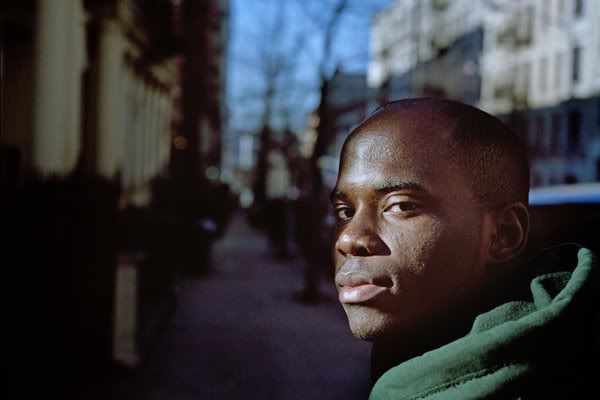
In their Sunday edition today, the New York Times published an op-ed written by 23 year-old Nicholas K. Peart who is a student at Borough of Manhattan Community College.


When I was 14, my mother told me not to panic if a police officer stopped me. And she cautioned me to carry ID and never run away from the police or I could be shot. In the nine years since my mother gave me this advice, I have had numerous occasions to consider her wisdom.

Peart goes on to describe 4 different incidents when he's been harassed by law enforcement for no reason. It takes a toll.

These experiences changed the way I felt about the police. After the third incident I worried when police cars drove by; I was afraid I would be stopped and searched or that something worse would happen. I dress better if I go downtown. I don’t hang out with friends outside my neighborhood in Harlem as much as I used to. Essentially, I incorporated into my daily life the sense that I might find myself up against a wall or on the ground with an officer’s gun at my head. For a black man in his 20s like me, it’s just a fact of life in New York...

We need change. When I was young I thought cops were cool. They had a respectable and honorable job to keep people safe and fight crime. Now, I think their tactics are unfair and they abuse their authority. The police should consider the consequences of a generation of young people who want nothing to do with them — distrust, alienation and more crime...

For young people in my neighborhood, getting stopped and frisked is a rite of passage. We expect the police to jump us at any moment. We know the rules: don’t run and don’t try to explain, because speaking up for yourself might get you arrested or worse. And we all feel the same way — degraded, harassed, violated and criminalized because we’re black or Latino. Have I been stopped more than the average young black person? I don’t know, but I look like a zillion other people on the street. And we’re all just trying to live our lives.

As a middle-aged white woman I can say that this is something I've never experienced. So my choice is to either ignore what Peart is saying, assume he's exaggerating, or take a minute to think about what its like to grow up like that. How might my world view be different if I had shared this experience (hint: attempting to do that is what we call empathy). Until folks like me take just a minute to try and walk in those shoes, we'll never understand the meaning of racism in our culture today. As far as I can see, its this kind of thing - and the results - that are the crux of the problem.

Based on my experience of talking to young black men, Peart's experience is not unique to him or to NYC. I suspect that most African American readers will see this article and say "So yeah, what's new?" How I see it, this editorial wasn't written for them. It was written (and published) for folks like me. We need to know that this is a fact of life in this country for young black men like Peart. So thanks to him for writing it and to the NYT for giving the words of a 23 year-old student such prominence on your pages. Perhaps a few more people like me will start to understand.

UPDATE: Young men like Peart and Dahlak are trying to tell us something...perhaps its time we listened.

Saturday, December 17, 2011

Sedentary agitation

Last week I wrote about a speech Newark Mayor Cory Booker gave in NH for the Obama campaign. In it he talked about too many Americans getting caught up in a state of "sedentary agitation" when it comes to our politics and democracy. Boy...did that ever resonate with me! Put a little more bluntly, he's saying that all we want to do is sit on our asses and bitch about what other people are/are not doing. How true that is.

Democracy in this country has become a spectator sport with everyone assuming the position of pundit. Writing a blog post/comment has become the definition of activism...except when we get really bold and call/tweet/email a member of Congress/the White House and tell them what we really think.

I say this even on the heels of the so-called OWS "movement." Certainly the people who have participated in "occupying" have done more than sit on their ass at home. But essentially all they've done is move their bitching to public spaces. If their goal had been to protest the lack of access to public spaces, they would have succeeded in taking appropriate action. But to sit in a park and yell at Wall Street until the cops kick you out is hardly an effective tool against the opponent they chose. Its the very definition of "sedentary agitation."

These day Teddy Roosevelt seems to be someone who spoke often about things we need to hear. Because when I think about all this, I can't help but be reminded of his words.

It is not the critic who counts: not the man who points out how the strong man stumbles or where the doer of deeds could have done better. The credit belongs to the man who is actually in the arena, whose face is marred by dust and sweat and blood, who strives valiantly, who errs and comes up short again and again, because there is no effort without error or shortcoming, but who knows the great enthusiasms, the great devotions, who spends himself for a worthy cause; who, at the best, knows, in the end, the triumph of high achievement, and who, at the worst, if he fails, at least he fails while daring greatly, so that his place shall never be with those cold and timid souls who knew neither victory nor defeat.

In other words, you can't score points until you get in the game. All the yelling from the sidelines won't cut it. But when you get in the game, not every play is going to work and sometimes the most important contributions go unnoticed. So we have to be prepared to do the grunt work and risk failure. That's why this poem by Marge Piercy will always be one of my favorites.

To Be of Use

The people I love the best
jump into work head first
without dallying in the shallows
and swim off with sure strokes almost out of sight.
They seem to become natives of that element,
the black sleek heads of seals
bouncing like half-submerged balls.

I love people who harness themselves, an ox to a heavy cart,
who pull like water buffalo, with massive patience,
who strain in the mud and the muck to move things forward,
who do what has to be done, again and again.

I want to be with people who submerge
in the task, who go into the fields to harvest
and work in a row and pass the bags along,
who are not parlor generals and field deserters
but move in a common rhythm
when the food must come in or the fire be put out.

The work of the world is common as mud.
Botched, it smears the hands, crumbles to dust.
But the thing worth doing well done
has a shape that satisfies, clean and evident.
Greek amphoras for wine or oil,
Hopi vases that held corn, are put in museums
but you know they were made to be used.
The pitcher cries for water to carry
and a person for work that is real.

There is a collaborative rhythm, a grittiness and an invisibility that goes with work that is real...be it in politics or any other endeavor. Those who are willing to risk that are the real movers and shakers of the world as far as I'm concerned.

More Obama derangement syndrome about "indefinite detention"

As you may know, Congress passed the National Defense Authorization Act (NDAA) which funds the military and most liberals/Democrats are not happy about some provisions in the bill that the Republicans insisted on including.

Of course as happens so often, some liberals/Democrats express their concerns rationally and others have a habit of using things like this to fuel their "Obama derangement syndrome" (ODS). A good example would be the contrast between how someone like Adam Serwer (who has been a pretty harsh critic of President Obama on civil liberties) handles it with how the king of ODS Glenn Greenwald deals with it.

If you want to do the hard work of being an informed citizen, I'd encourage you to take a look at those two articles and make up your own mind about what's going on here. I have another purpose in mind for what I want to talk about.

What has bothered me most about the ODS crowd on these issues is how they are so insistent on ignoring history and/or current practices that don't feed their need to blame President Obama for everything. To listen to them, you'd think that the U.S. had never tortured anyone before Bush/Cheney came along and that, until Bradley Manning, no prisoner in this country had ever been subjected to solitary confinement. As I wrote about before, in his new book Glenn Greenwald seems to think there was some utopian time in our country's past where the "rule of law" reigned supreme. It all reeks of incredible ignorance.

And Greenwald is up to it again in his poutrage about NDAA. His big beef on this one is all about the issue of "indefinite detention." Unlike others who have critiqued his take on all of this, I was struck by one short sentence in his article about it that I linked above.

But this is the first time this power of indefinite detention is being expressly codified by statute.

That is simply not true. First of all, you have to acknowledge that the real crime in the first place was in declaring a "War on Terrorism." Because once we are legally "at war," the law allows for holding prisoners indefinitely until the hostilities have ended. Like most countries, this has been common practice for the U.S. The problem is with declaring war on a tactic instead of a country (or alliance of countries). Its the indefiniteness of the war that is the issue here.

And secondly, as I've written about before, Greenwald also completely ignores that there is one arena in our prison industrial complex where indefinite detention has been practiced for decades. I don't know the particulars in other states, but here in Minnesota, we have as many as 600 people who have been indefinitely detained because of sex crimes.

Among their ranks are more than 40 elderly offenders, some in wheelchairs; low-functioning adults considered to be little risk of re-offending; and young men without felony records who were hastily committed to the sex-offender program after completing juvenile sentences.

The most outrageous of cases includes:

...a Rice County man who was convicted of possessing child pornography as a juvenile and ended up at the program's Moose Lake facility when he became an adult.

Now I know that people freak out over sex crimes in a way that they don't over other criminal activity (seems to be true of "terrorism" as well). And the media has done a great job of convincing folks that "once a sex criminal...always a sex criminal," just as they created the myth of the super predator that sent thousands of (mostly black) young men to jail for life.

But whether you agree or disagree with the practice of indefinite detention for sex crimes, Glenn Greenwald is simply wrong when he suggests that its never been codified into our laws before.

For me, that doesn't make it right. Its simply yet another example of the selective poutrage by folks like Greenwald and why - until they embrace ALL of the victims of these kinds of practices - I'll simply write them off as ignorant at best and suffering from Obama derangement syndrome at worst.

Friday, December 16, 2011

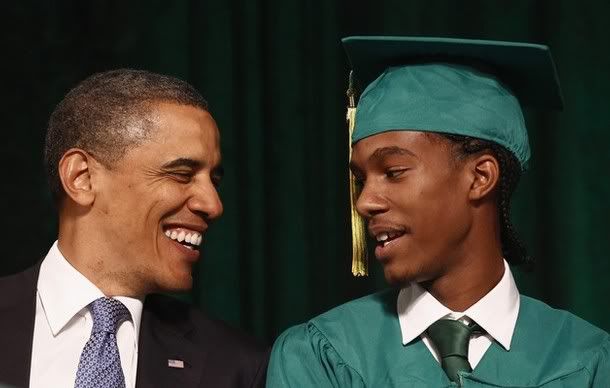
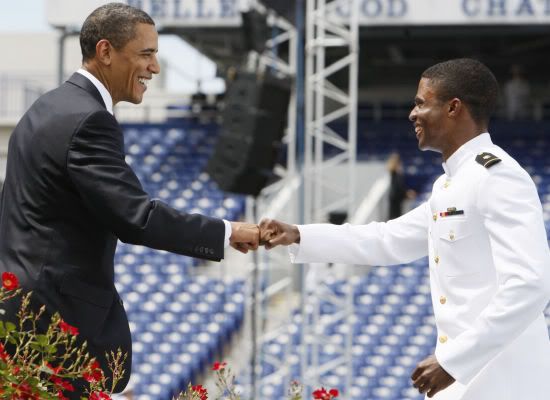
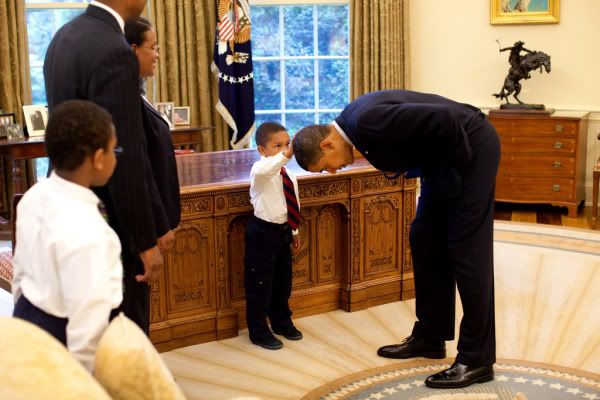
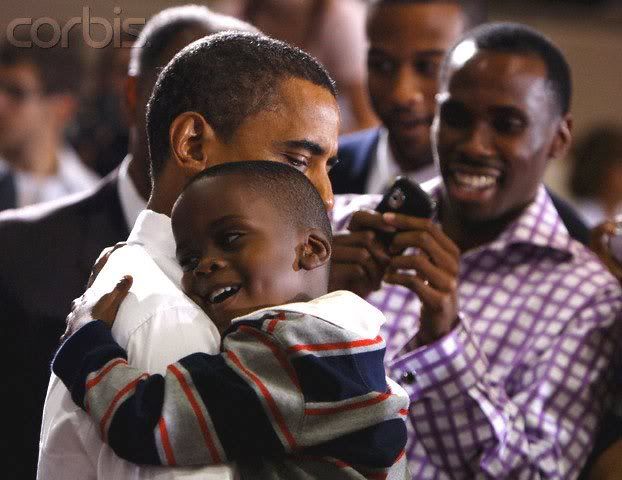
President Obama as inspiration


Photobucket


I have a story to go along with these.

Where I work we have 4 staff who work in middle schools with students who tend to be chronically suspended from school. Due to some of the factors that contribute to the cradle to prison pipeline those students are disproportionately African American boys.

After Barack Obama's election, one of our staff told us that when talking to these boys about their behavior, he would often ask them "What do you think Obama would do?" He found that when he did that, the boys would engage in the conversation and think about how it applied to their situation.

If, in handling himself with such intelligence and dignity at all times accomplishes nothing more than to inspire these young men to have the courage to make better choices in their lives, Obama will have been a transformational president.

Immigrants and domestic migrants could be major factors in the Texas Senate race.

A few weeks ago I wrote about how MAGA influencers are trying to convince their base that - despite Trump's growing disapproval rates -...