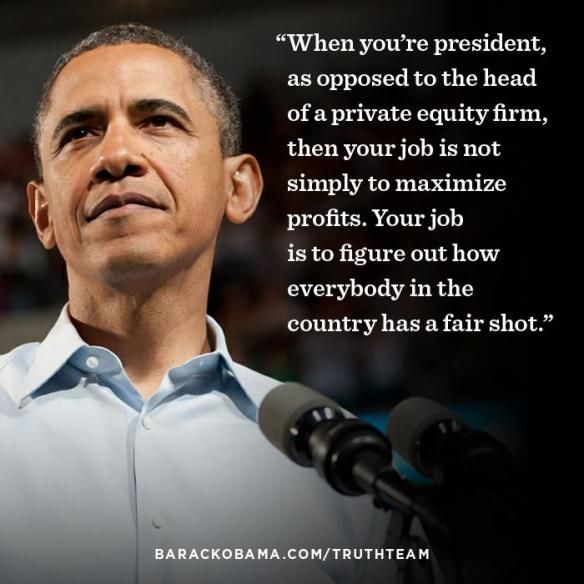
Wednesday, July 4, 2012

What do we celebrate today?

Last night as I was thinking about the death of Andy Griffith and the July 4th holiday coming, I remembered an article Tim Wise wrote four years ago on the heels of the Jeremiah Wright controversy. It had a pretty profound effect on me as I contemplated the American history I had been taught both in school and in the general culture.
What Jeremiah Wright knows, and told his flock–though make no mistake, they already knew it–is that 9/11 was neither the first, nor worst act of terrorism on American soil. The history of this nation for folks of color, was for generations, nothing less than an intergenerational hate crime, one in which 9/11s were woven into the fabric of everyday life: hundreds of thousands of the enslaved who died from the conditions of their bondage; thousands more who were lynched (as many as 10,000 in the first few years after the Civil War, according to testimony in the Congressional Record at the time); millions of indigenous persons wiped off the face of the Earth. No, to some, the horror of 9/11 was not new. To some it was not on that day that "everything changed." To some, everything changed four hundred years ago, when that first ship landed at what would become Jamestown. To some, everything changed when their ancestors were forced into the hulls of slave ships at Goree Island and brought to a strange land as chattel. To some, everything changed when they were run out of Northern Mexico, only to watch it become the Southwest United States, thanks to a war of annihilation initiated by the U.S. government. To some, being on the receiving end of terrorism has been a way of life. Until recently it was absolutely normal in fact.

But white folks have a hard time hearing these simple truths. We find it almost impossible to listen to an alternative version of reality. Indeed, what seems to bother white people more than anything, whether in the recent episode, or at any other time, is being confronted with the recognition that black people do not, by and large, see the world like we do; that black people, by and large, do not view America as white people view it. We are, in fact, shocked that this should be so, having come to believe, apparently, that the falsehoods to which we cling like a kidney patient clings to a dialysis machine, are equally shared by our darker-skinned compatriots...

Most white people desire, or perhaps even require the propagation of lies when it comes to our history. Surely we prefer the lies to anything resembling, even remotely, the truth. Our version of history, of our national past, simply cannot allow for the intrusion of fact into a worldview so thoroughly identified with fiction. But that white version of America is not only extraordinarily incomplete, in that it so favors the white experience to the exclusion of others; it is more than that; it is actually a slap in the face to people of color, a re-injury, a reminder that they are essentially irrelevant, their concerns trivial, their lives unworthy of being taken seriously. In that sense, and what few if any white Americans appear capable of grasping at present, is that "Leave it Beaver" and "Father Knows Best," portray an America so divorced from the reality of the times in which they were produced, as to raise serious questions about the sanity of those who found them so moving, so accurate, so real. These iconographic representations of life in the U.S. are worse than selective, worse than false, they are assaults to the humanity and memory of black people, who were being savagely oppressed even as June Cleaver did housework in heels and laughed about the hilarious hijinks of Beaver and Larry Mondello.
I grew up on "Leave it to Beaver," "Father Knows Best," and "The Andy Griffith Show." And as well-meaning as some of the people in those shows might have been, they are a big part of the reason I was so blinded to what was going on all around me. They fooled me into thinking that they represented what was happening in America at the time. Even now, way too many people look back on television shows like that and long for the "good old days" that are actually a fantasy that never happened except in the willfully blind eyes of those who chose not to see.

That is definitely NOT the America I celebrate because it is a lie.

As we all know, when President Obama addressed the Wright controversy, he talked about our efforts "to form a more perfect union."
"We the people, in order to form a more perfect union ..." — 221 years ago, in a hall that still stands across the street, a group of men gathered and, with these simple words, launched America's improbable experiment in democracy. Farmers and scholars, statesmen and patriots who had traveled across an ocean to escape tyranny and persecution finally made real their declaration of independence at a Philadelphia convention that lasted through the spring of 1787.

The document they produced was eventually signed but ultimately unfinished. It was stained by this nation's original sin of slavery, a question that divided the colonies and brought the convention to a stalemate until the founders chose to allow the slave trade to continue for at least 20 more years, and to leave any final resolution to future generations.

Of course, the answer to the slavery question was already embedded within our Constitution — a Constitution that had at its very core the ideal of equal citizenship under the law; a Constitution that promised its people liberty and justice and a union that could be and should be perfected over time.

And yet words on a parchment would not be enough to deliver slaves from bondage, or provide men and women of every color and creed their full rights and obligations as citizens of the United States. What would be needed were Americans in successive generations who were willing to do their part — through protests and struggles, on the streets and in the courts, through a civil war and civil disobedience, and always at great risk — to narrow that gap between the promise of our ideals and the reality of their time.
What I celebrate today are all the times we've "perfected our union" by opening our arms a bit wider to say "You belong" to people who have been left out. We've had a few of those moments in the last few years.

Like on election night 2008.
Photobucket

The repeal of DADT.
Photobucket

The day DREAMers had a reason to dream again.
Photobucket

That is the America I celebrate this July 4th.

Its been building slowly over these last 226 years and still has a ways to go.

Tuesday, July 3, 2012

Somebody That I Used to Know

If you're not already one of the 125 million people who've seen this one - take a listen.

A choice between human dignity and profit

Now that some pollsters are starting to tell us that the Obama campaign's focus on Romney's record at Bain are working, there has been some return to talking about just what issues his business career highlights. I found what Matthew Yglesias said about it to be particularly prescient.
All that said, while I’m happy to defend the layoff business as a legitimate and even useful element of a dynamic modern economy, I’m sure glad it’s not my job. Normal people, if put in a position where layoffs are necessary, find them to be emotionally arduous in the extreme. I wouldn’t want to be the guy who takes over companies and shuts down operations for a living, and I don’t think I’d want to be friends with that guy. It seems like a job only an emotionally unbalanced jerk would want, hence Up in the Air... To walk into a dying factory or doomed corporate office and actually fire people, you need to be pretty callous.

So one question is simply whether that's the kind of disposition people want in a president. Maybe it is... But maybe market economy is a cold and unfeeling place full of Mitt Romneys and we want a public sector driven by compassion to temper it. After all, not everyone is as fortunate in business as Mitt Romney.
To understand my reaction to that, you need to know that I am a huge fan of the HBO series The Wire and its creator David Simon. Back in 2007 Simon gave a speech in which he talked about his own views that shaped the development of the show.  While my nature is to be more optimistic than he is, I found what he said to be prophetic.
We are in the postindustrial age. We do not need as many of us as we once did. We don’t need us to generate capital, to secure wealth. We are in a transitive period where human beings have lost some of their value. Now, whether or not we can figure out a way to validate the humanity of the individual, I have great doubts.
Simon then went on to lay out the question that confronts us, given this reality.
I didn’t start out as a cynic, but at every given moment where this country has had a choice - its governments, institutions, corporations, its social framework - to exalt the value of individuals over the value of the shared price, we have chosen raw unencumbered capitalism. Capitalism has become our god. You are not looking at a marxist up here, but you are looking at somebody who doesn’t believe that capitalism can work absent a social framework that accepts that it is relatively easy to marginalize more and more people in this economy. Capitalism has to be attended to. And that has to be a conscious calculation on the part of society, if that is going to succeed. Everywhere we have created an alternate america of haves and have-nots. At some point, either more of us are going to find our conscience or we’re not...

The Wire is certainly an angry show. It’s about the idea that we are worth less. And that is an unreasonable thing to contemplate for all of us. It is unacceptable. And none of us wants to be part of a world that is going to do that to human beings. If we don’t exert on behalf of human dignity at the expense of profit and capitalism and greed, which are inevitabilities, and if we can’t modulate them in some way that is a framework for an intelligent society, we are doomed.
When I read that in light of our current situation, I can't help but think of the many times President Obama has characterized this election as a make-or-break moment for the middle class. At its most fundamental level, it is our chance to make the choice Simon is talking about. The capitalism that Mitt Romney and the Republicans worship has to be attended to - that has to be a conscious calculation on our part. Its time for us to exert on behalf of human dignity as a priority over profit.

When Mitt Romney touts his business career at Bain as the foundation for his presidency, he's letting us know that he will come down on the side of profit, capitalism and greed...every time.

In contrast, here's President Obama at the 2008 Democratic Convention.
What -- what is that American promise? It's a promise that says each of us has the freedom to make of our own lives what we will, but that we also have obligations to treat each other with dignity and respect...

Our government should work for us, not against us. It should help us, not hurt us. It should ensure opportunity not just for those with the most money and influence, but for every American who's willing to work.

That's the promise of America, the idea that we are responsible for ourselves, but that we also rise or fall as one nation, the fundamental belief that I am my brother's keeper, I am my sister's keeper.

That's the promise we need to keep. That's the change we need right now.

Monday, July 2, 2012

"Its a hot one!"

Wow - if you think you've heard this song before - take a listen to this live performance.

The Republican Party exodus continues

A couple of weeks ago I posted excerpts from an article written by Republican Party officer Michael Stafford about leaving the party. And now the Obama campaign has released this video about Ohio firefighter Jim Heath.


For sane Republicans who are actually paying attention, I have a hunch this is happening more often than we think. As the Republicans continue to pander to their extremist base, it is inevitable.

Of course the news media and many of the blogs don't pay attention to these stories. They are the quiet changes that are happening that don't get the airtime of someone threatening armed insurrection over the Supreme Court ruling on health care reform.

But it is the building of a coalition with folks like Michael and Jim that will allow us to get this country moving again on the many challenges that face us.

What these people are doing takes both thought (something that can seem in short supply these days) and courage. It means changing your mind about things you've always believed. That's no small task.

But its exactly what President Obama's goal has been for a long time now.
Our goal should be to stick to our guns on those core values that make this country great, show a spirit of flexibility and sustained attention that can achieve those goals, and try to create the sort of serious, adult, consensus around our problems that can admit Democrats, Republicans and Independents of good will.

Sunday, July 1, 2012

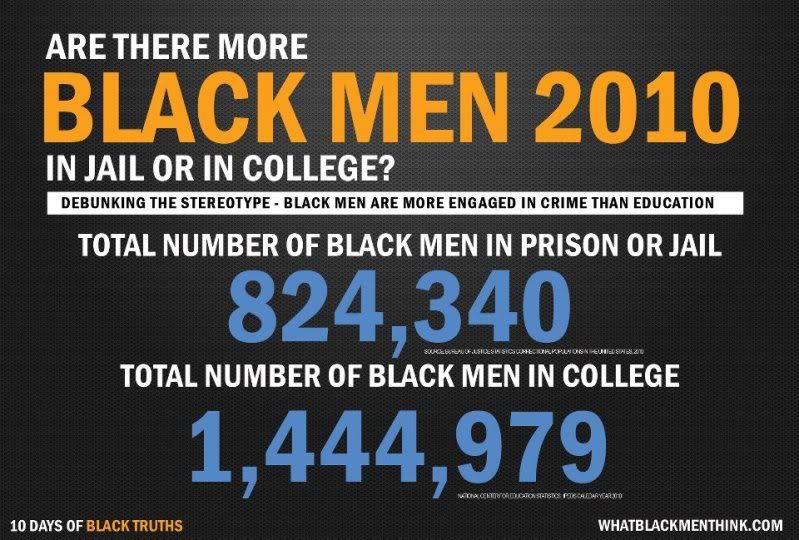
Bust a myth

Is it true that there are more black men in prison than there are in college?


Bust some more myths at Janks Morton's 10 Days of Black Truths.

ACA - a look at the health insurance exchanges

I'm one of the lucky ones. I have health insurance through my employer - who pays 85% of the premiums on a plan with 100% coverage (no deductibles) and small co-pays. The fact of the matter is that I live in a state (Minnesota) where that's not unusual. We rank 3rd in the nation in terms of those who are insured (91%), with only Massachusetts and Hawaii doing better (we're tied with Wisconsin and Vermont). Frankly, when all the conversation about health care reform happened a few years ago, I got educated real quickly about just how lucky I am from the stories I began reading in the media and on the blogs. So in many ways, my support for this legislation has always been mostly about what it would mean for other people who aren't so lucky.

But there's one aspect of health care reform that has always been important to me - the exchanges that are scheduled to go into effect in 2014. That's because at my place of employment, I am responsible for our budget - which means finding a way to pay for that 85% of the employer contribution.

As you probably already know from reading here, I'm the executive director of a small nonprofit. We have about 25 employees (less than 20 who participate in our health insurance plan) and the average age is probably about mid-30's.

Some people might not know that when an insurance company provides quotes for the costs of insurance, they take into account what the individual or group has cost them in the past. For large companies, that means that costs are averaged over a large pool of people. For someone like us - one person who needs surgery or has a chronic illness can send our rates sky high. As a matter of fact, for several years now we have been at the very top rate our insurance company charges - even though our pool tends to be young and pretty healthy. Overall, we pay much higher rates than large companies do.

I first realized the cost of this to our small nonprofit when we hired a woman many years ago who had a chronic illness. About the time our annual insurance quote was provided to us, she had realized that the job wasn't a good fit and had moved on. But our rates went up by double digits. When we told the insurance company that she was no longer an employee, our rates went way down.

This is the problem the health insurance exchanges in ACA are meant to address. Each state will be required to set up these exchanges where individuals and small businesses can purchase their insurance. That means that - once they're up and running - the rates in the exchanges will be set by a much larger pool of participants. So instead of our rates being determined by the use of the 20 or so individuals at our nonprofit, they will be based on all of the participants in the Minnesota exchange - thus extending to us the kind of benefit experienced by large companies.

The ACA requires that there be at least 2 insurance companies included in each exchange, and that at least one of those has be a non-profit. It also requires that each insurance company included in the exchange offer at least 4 options of coverage for the individual/business to chose from and there are limits on the amount of out-of-pocket expenses that can be charged to individual customers via co-pays and deductibles.

But here's a really interesting aspect to all of this that many of those who were in perennial poutrage mode about the public option missed. ACA allocated $4.8 billion towards establishing something they call a Consumer Operated and Oriented Plan (CO-OP) to compete in the exchanges. Here's how Kaiser describes it (pdf):
...to foster the creation of non-profit, member-run health insurance companies in all 50 states and District of Columbia to offer qualified health plans. To be eligible to receive funds, an organization must not be an existing health insurer or sponsored by a state or local government, substantially all of its activities must consist of the issuance of qualified health benefit plans in each state in which it is licensed, governance of the organization must be subject to a majority vote of its members, must operate with a strong consumer focus, and any profits must be used to lower premiums, improve benefits, or improve the quality of health care delivered to its members.
Finally, there is one very interesting thing the ACA did to ensure these exchanges work. The law requires that all members of Congress and their congressional staff purchase their health insurance through these exchanges (page 81, sec. 1312). So starting in 2014, my two Senators and Congresswoman (along with all their staff) will be participating in the same exchange my little nonprofit does to purchase health insurance.  If it doesn't work, they'll feel it too...personally.

Initially setting up these exchanges has been left to the states. You might have heard stories about Republican governors and legislatures refusing to do so. That will come back to haunt them because if they don't have one going by 2014, the federal government will be setting one up to offer to their constituents. During the passage of ACA, there was a big argument over whether the exchanges should be set up in the 50 states or simply have one national exchange. Progressives favored the latter (even bigger pool and potentially lower rates) but that move was defeated. So those Republican governors would simply be promoting the progressive alternative by refusing to participate ;-)

So there you have a brief outline of just one very important aspect of ACA. I would venture to say that not many outside the political junkie class have any idea about it or the benefits it will afford to those who must purchase health insurance either individually or as a small group. But as VP Joe Biden said, to those of us in that situation, this really is a BFD!

Immigrants and domestic migrants could be major factors in the Texas Senate race.

A few weeks ago I wrote about how MAGA influencers are trying to convince their base that - despite Trump's growing disapproval rates -...