Showing posts with label DOJ. Show all posts
Showing posts with label DOJ. Show all posts
Wednesday, February 4, 2015


Friday, January 16, 2015
Another Major Move by AG Holder
Just a couple of weeks ago, I wrote about the need to reform a relic of the war on drugs: civil asset forfeiture. Today Attorney General Eric Holder did just that.
This is a perfect example of how President Obama's administration can continue to incentivize reform at the federal and state level regardless of what Congress will/won't do.
Well done AG Holder!!!!
Attorney General Eric H. Holder Jr. on Friday barred local and state police from using federal law to seize cash, cars and other property without evidence that a crime occurred.Holder allowed exceptions for illegal firearms, ammunition, explosives and property associated with child pornography - which makes sense. And there are still state and local laws that enable forfeiture. But many of those require that proceeds go into a general fund rather than directly to law enforcement.
Holder’s action represents the most sweeping check on police power to confiscate personal property since the seizures began three decades ago as part of the war on drugs...
The program has enabled local and state police to make seizures and then have them “adopted” by federal agencies, which share in the proceeds. The program allowed police departments and drug task forces to keep up to 80 percent of the proceeds of the adopted seizures, with the rest going to federal agencies.
“With this new policy, effective immediately, the Justice Department is taking an important step to prohibit federal agency adoptions of state and local seizures, except for public safety reasons,” Holder said in a statement.
This is a perfect example of how President Obama's administration can continue to incentivize reform at the federal and state level regardless of what Congress will/won't do.
Well done AG Holder!!!!
Tuesday, January 6, 2015
An Update on President Obama's Clemency Initiative

The president complained that the pardon attorney's office favored petitions from wealthy and connected people, who had good lawyers and knew how to game the system. The typical felon recommended for clemency by the pardon attorney was a hunter who wanted a pardon so that he could apply for a hunting license.And so the person in charge of the Office of the Pardon Attorney was replaced by Deborah Leff and a new initiative was launched to commute the sentences of nonviolent drug offenders who were caught up in the disparities in laws governing crack and powder cocaine.
Along with many others, I was a bit disappointed that in December, all of this led to commutations for only 8 people currently in prison. But I've been keeping my eyes open for any reporting on how the process is going. The first comprehensive look at that came yesterday from Josh Gerstein. Of course he has to feed the cynicism beast by calling the whole thing a "quagmire" and searching desperately for reasons why its an absolute failure. But sifting out the wheat from the chaff, there are some helpful nuggets of information included.
The first thing that literally jumps off the page is that 25,000 prisoners have come forward since the initiative was announced. Since the President had previously criticized the process as favoring "wealthy and connected people," AG Holder set a different goal for this initiative.
"We have to have a process that I think works better, we need to come up with ways in which we identify people who are worthy of clemency, commutations, and not in the way I think we have traditionally done," Holder said.Working with state bar associations, independent outside groups, U.S. Attorneys and the Bureau of Prisons, DOJ attempted to get the word out to all potential applicants about the process and the availability of pro bono attorneys to assist them in applying. I'd suggest that 25,000 people showing interest means they were successful in reaching the goal Holder identified as a first step.
The next stage is for eligible prisoners to fill out a clemency petition. Assisting in that process is a group of organizations called the Clemency Project. Given the volume of applicants they are dealing with, it should come as no surprise that in October 2014 the ABA (one of the participating organizations) put out a call for more volunteers.
Gerstein points out one of the biggest reasons (other than the sheer numbers involved) for delays.
In addition, attorneys inside and outside the project say it has been hamstrung by a fairly mundane problem: protracted delays in getting basic paperwork from courts such as probation reports and judges’ detailed explanations for why prisoners received particular sentences — documents readily available only to government lawyers or the defense attorneys assigned to a case.Finally, clemency petitions are reviewed by staff in the Office of the Pardon Attorney for possible recommendations to the President. Here Gerstein reports that - even in the era of sequestration - that office has managed to double the amount of attorneys and staff working on this project. Of course, that means going from six attorneys to twelve - which is probably woefully too few.
“That’s sort of the sticky wicket in the process,” Clemency Project manager Cynthia Roseberry acknowledged in an interview. “The clog in the system is waiting for that data to come back.”
Given all that, this is an initiative that will likely require a long term view in order to see it come to fruition. I would expect additional results as President Obama goes all in on initiatives like this in his "fourth quarter." But it will also behoove us to look for presidential candidates in the future who will commit to appointing an Attorney General that is likely to continue Eric Holder's efforts to reform our criminal justice system - especially projects like this.
Sunday, December 7, 2014
Comings and Goings at DOJ
If she wasn't already in the spotlight as President Obama's nominee to be the next Attorney General, Loretta Lynch might have reached that status anyway as the United States Attorney for the Eastern District of New York - where she will oversee the federal inquiry into the choking death of Eric Garner.
There is some speculation about whether or not her involvement in that matter will be used against her during the hearings on her nomination. I doubt it will be a factor given that, with the investigation underway, she will be precluded from commenting on it. Besides, I'm sure the Republicans on the Senate Judiciary Committee already have their binders full of ways to press her about President Obama's executive orders on immigration.
But one thing stood out to me during AG Holder's announcement about his resignation. He will remain in the position until his successor is confirmed. Republicans are extremely anxious to see Holder go. It will be interesting to see if that encourages them to "get on with it" when it comes to approving Ms. Lynch.
While I'm on the topic of comings and goings, I'll just add that - while Eric Holder is retiring from his current position - he knows there's still a lot of work to do.
There is some speculation about whether or not her involvement in that matter will be used against her during the hearings on her nomination. I doubt it will be a factor given that, with the investigation underway, she will be precluded from commenting on it. Besides, I'm sure the Republicans on the Senate Judiciary Committee already have their binders full of ways to press her about President Obama's executive orders on immigration.
But one thing stood out to me during AG Holder's announcement about his resignation. He will remain in the position until his successor is confirmed. Republicans are extremely anxious to see Holder go. It will be interesting to see if that encourages them to "get on with it" when it comes to approving Ms. Lynch.
While I'm on the topic of comings and goings, I'll just add that - while Eric Holder is retiring from his current position - he knows there's still a lot of work to do.
This whole notion of reconciliation between law enforcement and communities of color is something that I really want to focus on and to do so in a very organized way. Not just as Eric Holder, out there giving speeches—though certainly that could be a part of it—but to have maybe a place where this kind of effort is housed and to be associated with that kind of an entity. That’s the kind of thing I’m beginning to think about.
Thursday, December 4, 2014
Thank You AG Holder!!!
For years now one of the things that has frustrated me about the "what have you done for me lately" Blackacademics has been their insistence that the Obama administration hasn't done anything for the African American community. That's why - back in 2011 - I started writing about DOJ's investigations into police brutality.
Today we learned that the investigation into Cleveland's Police Department has resulted in a finding that they have engaged in a pattern and practice of using excessive force. It is horribly sad that this finding comes too late to save the life of Tamir Rice. But perhaps we can take some small amount of comfort in the probability that previous investigations have saved the lives of others. And hopefully this one will be part of finding justice for Tamir's death.
P.S. For those of you who - like me - are going to miss having Eric Holder as our Attorney General, this article about what he plans to do in the future is hopeful. And in 2 years, he's likely to have some company :-)

Today we learned that the investigation into Cleveland's Police Department has resulted in a finding that they have engaged in a pattern and practice of using excessive force. It is horribly sad that this finding comes too late to save the life of Tamir Rice. But perhaps we can take some small amount of comfort in the probability that previous investigations have saved the lives of others. And hopefully this one will be part of finding justice for Tamir's death.
P.S. For those of you who - like me - are going to miss having Eric Holder as our Attorney General, this article about what he plans to do in the future is hopeful. And in 2 years, he's likely to have some company :-)
But, I have to say; these are the kinds of issues that I’ve talked about with the President since his first days here in Washington, DC. I met him before he had been sworn in as a senator. We bonded over these criminal justice reform concerns and views of racial matters. We share a worldview...
Thursday, September 25, 2014
Eric Holder: A nation of cowards
In honor of Attorney General Eric Holder's announcement today, I'd like to invite you to listen to the speech he gave to staff at the Department of Justice during Black History Month 2009. No U.S. Attorney General has ever spoken more boldly or acted more aggressively on behalf of civil rights for all Americans.
Wednesday, September 17, 2014
Is the glass half full or half empty?

Two recent headlines about the exact same information are a perfect illustration of why President Obama keeps reminding us that cynicism is a choice.
Both stories (the first at WaPo's Wonkblog and the second at Think Progress) are about this recently released report from the Bureau of Justice Statistics. But they can't both be accurate, can they?
Here's what you need to know:
- The information in the BJS report includes data on both state and federal prisons.
- The second article focuses on the raw number of inmates - which has gone up slightly for states and down for the federal system.
- As the population of the U.S. grows, a better gauge over time is the rate of inmates per U.S. resident. That number has fallen - as reported in the first article.
If we look at the rate of inmates/100,000 residents, here is what has happened over the last five years.
2008 - 506
2009 - 504
2010 - 500
2011 - 492
2012 - 480
2013 - 478
Those numbers might not look dramatic. But they represent a huge change in the trajectory we've seen over the last 40 years.

As Keith Humphreys (who wrote the first article) says:
The U.S. established mass incarceration over decades, and it will not be unmade overnight. Moving in the right direction for five straight years is splendid, but I believe we could pick up the pace while still protecting the public. My hope is that the many sentencing reforms passed in states in the past couple years have not yet had time to make as much impact as they will in the future; President Obama and AG Holder’s recent efforts at the federal level could well be in the same boat. Like the Dalai Lama, I choose to be optimistic because I cannot think of a better alternative.So its interesting to wonder why Think Progress - normally an excellent source of news - would chose to ignore the positive trends. Humphreys, who has been writing about them, recently answered that question. Apparently he got some push-back from prison reform activists for reporting that the glass might actually be half full.
But a small group of people are upset that I have engaged in what might be called “airing clean laundry”. Their argument is that by letting the public know that incarceration rates are going down, I am effectively declaring that mass incarceration is over (even though I have repeatedly said just the opposite) and implicitly encouraging everyone to move on to some other social problem.This is EXACTLY the issue President Obama is addressing when he says that cynicism is a choice - and that hope is a better choice.
The consequentialist argument against sharing good news regarding a longstanding social problem is that it invariably undermines further reform by reducing the public’s sense of urgency. I am not convinced that this hypothesis is correct. Ignoring evidence of positive change can increase despair and thereby reduce the willingness of advocates to keep trying. In contrast, showing evidence of success builds hope and confidence. Further, highlighting the achievements of reformers brings them attention and respect, which can help sustain them in their difficult work.
Thursday, September 4, 2014
Good News Thursday!
Perhaps the fever swamp of summer silly season is finally over. Today we're actually hearing some good news.
Back in July, two District Court judges ruled that subsidies to purchase health insurance were excluded from people living in states that had their exchanges run by the federal government. If left to stand, this dealt a huge blow to the funding mechanism incorporated into Obamacare. Today, the entire DC circuit vacated that ruling.
In practical terms, this means that July’s judgment cutting off subsidies to consumers who buy insurance plans in federally-operated health exchanges is no more. It has ceased to be. It is, in fact, an ex-judgment.And further:
Now that the full DC Circuit has vacated the two Republican judges’ July judgement, Supreme Court review is much less likely.In other words, "goodbye Halbig, and good riddance!"
In the area of deeds being MUCH more significant than words, the DOJ's Civil Rights Division has expanded their investigation beyond just the shooting of Michael Brown and will now investigate the entire operation of local law enfacement in Ferguson.
The investigation, which could be announced as early as Thursday afternoon, will be conducted by the Justice Department’s civil rights division and follow a process similar to that used to investigate complaints of profiling and the use of excessive force in other police departments across the country, the officials said...Just in case you're keeping count...
The federal officials said the probe will look not only at Ferguson but also at other police departments in St. Louis County. Some, like Ferguson, are predominantly white departments serving majority-African-American communities, and at least one department invited the Justice Department to look at its practices.
The number of police department reviews the Justice Department has initiated under Holder for possible constitutional violations is twice that of any of his predecessors. At least 34 other departments are under investigation for alleged civil rights violations.Finally, it might be time to start re-thinking that whole "Republican wave" meme about the 2014 Senate races. Last week Sam Wang (who actually did better at predicting the 2012 elections than Nate Silver) pointed out that most models don't rely simply on polling, but also incorporate something called "fundamentals." This basically means that - especially early on - they make their predictions based on "prior conditions like incumbency, candidate experience, funding, and the generic Congressional ballot." Given that most of these races are taking place in "red states," it should come as no surprise that these prior conditions gave the Republican candidate the edge.
But as the models switch to rely more on actual polling, something interesting is happening.
On July 15, Election Lab, The Post's election model, gave Republicans an 86 percent chance of winning the six seats they needed to take over the Senate majority. Today -- 50 days later -- it gives Republicans only a 52 percent chance of winning the majority.According to John Sides, "Democratic candidates are currently overperforming how past history suggests they should be doing in a number of races." Wang (who relies solely on polls) has the probability of Democrats maintaining control of the Senate at 90% today and 85% on election day.
So hold on to your hats folks, we've got two months to go and the fat lady ain't sung yet ;-)
Thursday, August 21, 2014
President Obama and AG Holder working together

At his press conference on Monday, President Obama recalled some of the work he did on criminal justice reform while he was a state senator.
One of the things I was most proud of when I was in the state legislature, way back when I had no gray hair and none of you could pronounce my name, was I passed legislation requiring videotaping of interrogations and confessions and I passed legislation dealing with racial profiling in Illinois.That reminded me that two years ago I wrote about a whole spectrum of work on criminal justice reform then-senator Barack Obama had done during his short tenure in the state legislature. I found it documented at - of all places - the Daily Caller, where they were horrified at the extent to which President Obama had engaged in this type of reform (i.e., "he's really a blackly-black radical!"). It is rare to non-existent to see stories about this in the mainstream or liberal media.
That's why I find articles like this one, where supposedly professional journalists project their own assumptions into their work rather than actually look at the historical record, to be nothing more than lazy reporting. The tag line reads: "Holder and Obama Differ in Approach to Underlying Issues of Missouri Unrest." They describe AG Eric Holder as a "child of the civil rights era," and contrast that with this about Obama:
He was too young and removed to experience the turmoil of the 1960s, growing up in a multiracial household in Hawaii and Indonesia. As he now seeks balance in an unbalanced time, he wrestles with the ghosts of history that his landmark election, however heady, failed to exorcise.Its true that Eric Holder is 10 years older and grew up in Queens. I'm sure the two men don't always agree about everything. But even as the authors attempt to paint them at odds on these issues, they can't ignore that President Obama chose Eric Holder as his Attorney General precisely because of their shared vision on "overhauling the justice system." In the end, this is an attempt to create a story that doesn't exist.
I would posit that what we have in this country right now are two leaders who grew up as African American males in different circumstances, but came to the same conclusion about the need for reform. Right now they have different jobs they've undertaken to produce that reform. And they're doing a mighty find job of working together to get it done!
Sunday, August 3, 2014
A pragmatist's guide to criminal justice reform
"Years of intensive study — and decades of professional experience — have shown that we will never be able to prosecute and incarcerate our way to becoming a safer nation."That is what Attorney General Eric Holder said in a speech this week to the National Association of Criminal Defense Lawyers.
There is a movement underway to finally walk back the failed "war and drugs" and "tough on crime" initiatives that have caused so much havoc, ended so many lives and cost our country dearly. Its interesting to me that this movement is getting so little attention. Perhaps that's because it doesn't fit very well into our current obsession with how polarized our politics are these days. People on both the right and the left are joining this movement - perhaps for very different reasons. But regardless of motivations, most of them agree with what AG Holder said.
The Obama administration has launched three major initiatives in this area. The first was A Drug Policy for the 21st Century. The plan lays out four evidence-based strategies:
- Prevent drug use through education
- Expand access to treatment
- Reform our criminal justice system by keeping non-violent drug offenders out of prison
- Support people in recovery
While law enforcement will always play a vital role in protecting our communities from drug-related crime and violence, we simply cannot incarcerate our way out of the drug problem. Put simply, an enforcement-centric “war on drugs” approach to drug policy is counterproductive, inefficient, and costly.Secondly, in order to challenge the "tough on crime" mantra that fueled so many of these failed policies, AG Holder initiated a Smart on Crime approach. It contains five principles:
- Prioritize prosecutions to focus on the most serious cases
- Reform sentencing to eliminate unfair disparities and reduce overburdened prisons
- Pursue alternatives to incarceration for low-level nonviolent crimes
- Improve reentry to curb repeat offenses and re-victimization
- "Surge" resources to violence prevention and protecting most vulnerable populations
Finally, this April the Obama administration announced its Clemency Project 2014. We haven't heard much about that one lately. But I suspect that we are in the stage in which petitions are being prepared and/or reviewed. At some point in the next few months we are likely to begin hearing announcements about the granting of clemency to prisoners who qualify.
On the other side of the isle, the web site Right on Crime provides a clearinghouse for all the conservative initiatives that are currently underway - mostly at the state level. As I've mentioned before, states like Mississippi, South Carolina and Texas are undertaking major reforms to their criminal justice systems. At that site you'll find names like Grover Norquist, Mark Levin and Jeb Bush joining the bandwagon for reform.
For a bi-partisan and international approach to much of this, check out the signatories to Breaking the Taboo - an initiative focused on ending the war on drugs. You'll find that people like Lech Walesa, George Schultz, Noam Chomsky and President Jimmy Carter have signed on.
I see that some of my friends who are Obama supporters have taken to criticizing Sen. Cory Booker for teaming up with Sen. Rand Paul on a bill promoting reform. I don't support Rand Paul and wouldn't vote for him for dog-catcher - much less president. But when he supports a bill that allows teenagers and ex-offenders to have their records cleared of past offenses for low-level crimes, I'm ready to team up on that one! I think this is exactly what Bernice Johnson Reagon was talking about when she said:
...in order to take the next step we’ve got to do it with some folk we don’t care too much about. And we got to vomit over that for a little while. We must just keep going.So yes, I'll vomit a bit over agreeing with libertarian Rand Paul (and all the conservatives who are joining this movement) and then get on with the business of reforming our criminal justice system. That's what pragmatists do.
Monday, June 9, 2014
How should we measure a president's success?
I, for one, really appreciate Jonathan Chait's column yesterday titled: Obama Promised to do 4 Big Things as President. Now He's Done Them All. He uses the following statement from the President's 2008 Inaugural Address to name those 4 things:
But what strikes me in this kind of analysis is that most of that list involves legislative accomplishments. That is primarily the job of Congress. In the separation of powers outlined by our founders, the main job of the presidency is not to legislate, but to administer the functions of the federal government. And yet when it comes time to evaluate a president's performance, that aspect of the job is most often not included.
We must not forget that President Obama not only had to clean up the financial and foreign policy messes of the previous administration. He faced a FEMA that completely botched the response to Hurricane Katrina, a Justice Department that was politicized and corrupted, and yes...a Veterans Administration that was incapable of dealing with the needs of soldiers deployed in unnecessary wars.
We're not likely to see headlines when - even in the midst of escalating climate disasters - FEMA performs competently and thoroughly. And yet, anyone who has ever had to turn around a poorly functioning system knows that is always a difficult and complex management process. I would count that as one of the major success stories of the Obama administration.
But perhaps nowhere was the job more daunting or necessary than at the Department of Justice. Particularly, we know that hiring in the Civil Rights Division had become a politicized process and the focus of investigations had shifted to claims of so-called "reverse racism." I've tried to document how AG Eric Holder and former Civil Rights Division Director Thomas Perez worked effectively to turn all that around.
And so, when I listen to the "what have you done for me lately" conversations (like the one engaged on Melissa Harris-Perry's show yesterday) that attempt to lecture President Obama on the need for structural reforms to address racism, I am amazed at the ignorance of actual structural reforms that have been undertaken by this administration. At least one guest actually mentioned the work by DOJ and the Department of Education on ending the school-to-prison pipeline. But there was no reference at all to things like:
Homes have been lost, jobs shed, businesses shuttered. Our health care is too costly, our schools fail too many, and each day brings further evidence that the ways we use energy strengthen our adversaries and threaten our planet.And so President Obama's initiatives on the stimulus bill, Wall Street reform, health care reform, education reform and now climate change are noted as major accomplishments.
But what strikes me in this kind of analysis is that most of that list involves legislative accomplishments. That is primarily the job of Congress. In the separation of powers outlined by our founders, the main job of the presidency is not to legislate, but to administer the functions of the federal government. And yet when it comes time to evaluate a president's performance, that aspect of the job is most often not included.
We must not forget that President Obama not only had to clean up the financial and foreign policy messes of the previous administration. He faced a FEMA that completely botched the response to Hurricane Katrina, a Justice Department that was politicized and corrupted, and yes...a Veterans Administration that was incapable of dealing with the needs of soldiers deployed in unnecessary wars.
We're not likely to see headlines when - even in the midst of escalating climate disasters - FEMA performs competently and thoroughly. And yet, anyone who has ever had to turn around a poorly functioning system knows that is always a difficult and complex management process. I would count that as one of the major success stories of the Obama administration.
But perhaps nowhere was the job more daunting or necessary than at the Department of Justice. Particularly, we know that hiring in the Civil Rights Division had become a politicized process and the focus of investigations had shifted to claims of so-called "reverse racism." I've tried to document how AG Eric Holder and former Civil Rights Division Director Thomas Perez worked effectively to turn all that around.
And so, when I listen to the "what have you done for me lately" conversations (like the one engaged on Melissa Harris-Perry's show yesterday) that attempt to lecture President Obama on the need for structural reforms to address racism, I am amazed at the ignorance of actual structural reforms that have been undertaken by this administration. At least one guest actually mentioned the work by DOJ and the Department of Education on ending the school-to-prison pipeline. But there was no reference at all to things like:
- historic levels of investigations into police brutality
- prosecution of banks for "reverse redlining"
- challenges to voting restrictions and unconstitutional immigration laws
- settlement of centuries-old claims of Native Americans against the federal government
- shifting the conversation from being "tough on crime" to being "smart on crime" with a resulting historic drop in prison admissions
- launch of the Clemency Project
Saturday, May 17, 2014
An administration committed to civil rights
Ever since Barack Obama was elected President in 2008, I've wanted to watch every moment of his journey because I think something truly remarkable is happening. There are times when it is the relatively small things that often go unnoticed by our media that actually stand out to me.
For example, did you know that today is the International Day Against Homophobia and Transphobia? And are you aware that yesterday the President issued a statement commemorating it?
And then, of course today we are also celebrating the 60th Anniversary of the Supreme Court decision on Brown v Board of Education. Senior Advisor Valerie Jarrett and AG Eric Holder wrote this to commemorate the occasion:
For example, did you know that today is the International Day Against Homophobia and Transphobia? And are you aware that yesterday the President issued a statement commemorating it?
Tomorrow, as we commemorate the 10th annual International Day Against Homophobia and Transphobia, we recommit ourselves to the fundamental belief that all people should be treated equally, that they should have the opportunity to reach their fullest potential, and that no one should face violence or discrimination -- no matter who they are or whom they love.This comes a week after Obama's Secretary of Defense said it was time to review the military's ban on transexuals. B.F.D!!!
And then, of course today we are also celebrating the 60th Anniversary of the Supreme Court decision on Brown v Board of Education. Senior Advisor Valerie Jarrett and AG Eric Holder wrote this to commemorate the occasion:
...for all the progress our nation has seen over the last six decades, this is a process that continues, and a promise that has yet to be fully realized, even today.This is happening because President Obama appointed people to these critical positions who "get it." For example, this morning AG Holder made some powerful remarks to Morgan State University graduates. In reference to the Sterling and Bundy sagas, he said:
While the number of school districts that remain under desegregation court orders has decreased significantly in just the past decade, the Department of Justice continues to actively enforce and monitor nearly 200 desegregation cases where school districts have not yet fulfilled their legal obligation to eliminate segregation “root and branch.” In those cases, the department works to ensure that all students have the building blocks of educational success – from access to advanced placement classes, to facilities without crumbling walls and old technology, to safe and positive learning environments.
The Departments of Justice and Education are also working together to reform misguided school discipline policies that fuel the “school-to-prison pipeline.” Some of these policies, while well-intentioned, have resulted in students of color facing suspensions and expulsions at a rate three times higher than that of their white peers. And the Administration is moving in a variety of ways to dismantle racial barriers and promote inclusion, from America’s classrooms, to our courtrooms, to our voting booths – and far beyond.
But we ought not find contentment in the fact that these high-profile expressions of outright bigotry seem atypical and were met with such swift condemnation. Because if we focus solely on these incidents -- on outlandish statements that capture national attention and spark outrage on Facebook and Twitter -- we are likely to miss the more hidden, and more troubling, reality behind the headlines.Holder went on to describe the "disparate impact" of things like zero tolerance policies in our schools, the racial disparities that persist in the criminal justice system and attacks on voting rights as the form of racism that is more subtle and cuts deeper.
These outbursts of bigotry, while deplorable, are not the true markers of the struggle that still must be waged, or the work that still needs to be done -- because the greatest threats do not announce themselves in screaming headlines. They are more subtle. They cut deeper. And their terrible impact endures long after the headlines have faded and obvious, ignorant expressions of hatred have been marginalized.
This is the work that truly matters -- because policies that disenfranchise specific groups are more pernicious than hateful rants. Proposals that feed uncertainty, question the desire of a people to work [shoutout to Rep. Paul Ryan] and relegate particular Americans to economic despair are more malignant than intolerant public statements, no matter how many eyebrows the outbursts might raise. And a criminal justice system that treats groups of people differently -- and punishes them unequally -- has a much more negative impact than misguided words that we can reject out of hand.And in case anyone wonders where this administration comes down on the resent dust-up between Chief Justice Roberts and Justice Sotomayor on the current status of racism in this country... Holder set that record straight.
Chief Justice John Roberts has argued that the path to ending racial discrimination is to give less consideration to the issue of race altogether. This presupposes that racial discrimination is at a sufficiently low ebb that it doesn't need to be actively confronted. In its most obvious forms, it might be. But discrimination does not always come in the form of a hateful epithet or a Jim Crow like statute. And so we must continue to take account of racial inequality, especially in its less obvious forms, and actively discuss ways to combat it. As Supreme Court Justice Sonia Sotomayor wrote recently in an insightful dissent in the Michigan college admissions case -- we must not "wish away, rather than confront, the racial inequality that exists in our society... The way to stop discrimination on the basis of race is to speak openly and candidly on the subject of race."The Obama administration is clearly not in the business of taking the easy road when it comes to the matter of civil rights for ALL Americans. They're pushing the envelope on every one of these important issues. Sometimes the work that advances that cause catches the national headlines - like ending DADT. And sometimes it comes in baby steps - like this week when AG Holder spoke out against the excessive use of isolation in juvenile detention facilities. But regardless, the focus is clear and the determination is relentless. That's why I want to pay attention and not miss a moment of how it unfolds.
Wednesday, May 14, 2014
Asked and Answered
The targeted killing of Anwar al-Awlaki (al Qaeda leader and American citizen) in Yemen as part of President Obama's war on al Qaeda sparked huge controversy for some leftists and libertarians. As is often the case, the President's Office of Legal Counsel wrote a memo outlining the justifications for such an action. There has been a heated battle waged by critics of the administration to release that memo and it looks like that might happen shortly.
For those who assume that this will be some sort of "bombshell," I'd simply remind them that they are about to be seriously disappointed. That's because for over 2 years now the Obama administration has been forthcoming in laying out their legal rationale.
It all started back in March 2012 when Attorney General Eric Holder gave a speech detailing the executive authority provided to the President by the 2001 Authorization for the Use of Military Force to target members of al Qaeda - even if they are American citizens. Those same arguments were articulated in a Justice Department White Paper that was leaked to the press in February 2013. Finally, President Obama made the same argument in his speech on counterterrorism strategy in May 2013.
Critics of this administration's policy may not like or approve of the legal case that has been made for these actions. But the idea that those arguments have been kept secret in the Office of Legal Counsel memo are simply absurd. As a matter of fact, a circuit court judge who ruled in favor of the release of the memo said exactly that.
In that sense, the focus of these critics on the need for this memo to be released actually reminds me of the teapublicans focus on Benghazi. Just because you don't like the answers you got doesn't mean the question hasn't been addressed. As a matter of fact, on both issues, I'd say its been Asked and Answered. Time to move on.
For those who assume that this will be some sort of "bombshell," I'd simply remind them that they are about to be seriously disappointed. That's because for over 2 years now the Obama administration has been forthcoming in laying out their legal rationale.
It all started back in March 2012 when Attorney General Eric Holder gave a speech detailing the executive authority provided to the President by the 2001 Authorization for the Use of Military Force to target members of al Qaeda - even if they are American citizens. Those same arguments were articulated in a Justice Department White Paper that was leaked to the press in February 2013. Finally, President Obama made the same argument in his speech on counterterrorism strategy in May 2013.
Critics of this administration's policy may not like or approve of the legal case that has been made for these actions. But the idea that those arguments have been kept secret in the Office of Legal Counsel memo are simply absurd. As a matter of fact, a circuit court judge who ruled in favor of the release of the memo said exactly that.
“Whatever protection the legal analysis might once have had has been lost by virtue of public statements of public officials at the highest levels and official disclosure of the DOJ White Paper,” Judge Jon Newman wrote in the Second Circuit’s opinion...Since Senator Rand Paul is one who has again joined liberals in a demand that the memo be released, I can't help but remember when he staged a filibuster on the Senate floor because he decided that this letter from AG Holder wasn't enough to stop his grandstanding on this issue. Holder then sent a second letter that perhaps was more intelligible to the intellectual capacities of his audience. Addressing the question of whether or not the President has the authority to to use a weaponized drone to kill an American not engaged in combat on U.S. soil, he wrote:
The answer to that is no.Clear enough for ya?
In that sense, the focus of these critics on the need for this memo to be released actually reminds me of the teapublicans focus on Benghazi. Just because you don't like the answers you got doesn't mean the question hasn't been addressed. As a matter of fact, on both issues, I'd say its been Asked and Answered. Time to move on.
Wednesday, April 23, 2014
What the clemency initiative tells us about President Obama
At the end of his first term, President Obama had granted clemency to one person. Of course this led many people to conclude that he didn't care about criminal justice reform or correcting the racial disparities in that system - especially those created by our "war on drugs." As of this week, we know those conclusions were premature.
The shift started early in the President's second term when he basically announced an end to the war on drugs saying, "we simply cannot incarcerate our way out of the drug problem." Then last December, he commuted the sentences of eight federal prisoners who were serving long sentences due to crack cocaine convictions prior to the Fair Sentencing Act. Of course there were plenty of progressives who took that as an opportunity to talk about the thousands of others who were not granted clemency and lecture President Obama about the importance of courage.
But this was never about a lack of courage. Instead, its about a cultural bureaucracy that needed to be reformed.
The shift started early in the President's second term when he basically announced an end to the war on drugs saying, "we simply cannot incarcerate our way out of the drug problem." Then last December, he commuted the sentences of eight federal prisoners who were serving long sentences due to crack cocaine convictions prior to the Fair Sentencing Act. Of course there were plenty of progressives who took that as an opportunity to talk about the thousands of others who were not granted clemency and lecture President Obama about the importance of courage.
But this was never about a lack of courage. Instead, its about a cultural bureaucracy that needed to be reformed.
The pardon attorney, former military judge Ronald Rodgers, sends his recommendations of whether or not to grant the petitions to the Deputy Attorney General’s office, which then sends them on to the White House. The pardon attorney was recommending that the president deny nearly every single petition for a pardon or a reduced sentence, according to one senior official in the Obama administration.We also know that the President didn't like the kinds of recommendations that he was getting.
The president complained that the pardon attorney's office favored petitions from wealthy and connected people, who had good lawyers and knew how to game the system. The typical felon recommended for clemency by the pardon attorney was a hunter who wanted a pardon so that he could apply for a hunting license.We are in the process of learning that the work on all this has been underway for quite some time. Armed with a scathing report from the Inspector General's Office that concluded in December 2012, Ronald Rodgers is now gone from the pardon attorney's office and will be replaced by Deborah Leff who has been Senior Counselor for Access to Justice at DOJ, an initiative launched in 2010 to:
...address the access-to-justice crisis in the criminal and civil justice system. ATJ's mission is to help the justice system efficiently deliver outcomes that are fair and accessible to all, irrespective of wealth and status.Today, Assistant Attorney General Tom Cole (who oversees the pardon office) announced six criteria under which they will prioritize clemency applications.
- They are currently serving a federal sentence in prison and, by operation of law, likely would have received a substantially lower sentence if convicted of the same offense(s) today;
- They are non-violent, low-level offenders without significant ties to large scale criminal organizations, gangs or cartels;
- They have served at least 10 years of their prison sentence;
- They do not have a significant criminal history;
- They have demonstrated good conduct in prison; and
- They have no history of violence prior to or during their current term of imprisonment.
Deputy Attorney General Cole sent a letter to all of the 93 U.S. attorneys asking for their assistance in identifying meritorious candidates and notifying them that the Pardon Attorney’s Office will be soliciting their views on petitions that appear to meet the criteria after an initial screening by the lawyers in the Office of the Pardon Attorney.You see...it takes more than courage to do something like this right. President Obama is demonstrating that he's aware of the institutional and cultural barriers within the system that would line up to thwart an initiative like this. His administration has done the legwork to ensure that deserving inmates - regardless of their race and/or economic status - get access to this opportunity.
Holder told The Huffington Post that it was important for DOJ to "find people who are not traditionally thought of as good candidates" for clemency and "change the focus" of the Office of the Pardon Attorney.That's what real reform looks like, folks. This initiative has been in the works for months (if not years) now. My only remaining questions are "where has the media been while this has all been happening in plain sight?" And, "what other reforms are either completed or in the works that they're missing?"
"We have to have a process that I think works better, we need to come up with ways in which we identify people who are worthy of clemency, commutations, and not in the way I think we have traditionally done," Holder said.
Monday, April 21, 2014
President Obama initiates the "Clemency Project 2014" (updated)
Liz Goodwin tells Barbara Scrivner's story to highlight a major initiative by President Obama. She's already served 20 years of a 30-year sentence for selling a few ounces of methamphetamine.
Remember when President Obama said he had a pen and a phone that he was going to use? We're about to see how mighty that pen can be.
UPDATE: Today Attorney General Holder released this video announcing the "Clemency Project 2014."
Thousands and thousands of people like Scrivner are serving punishingly long sentences in federal prison based on draconian policies that were a relic of the "tough on crime" antidrug laws of the '80s and '90s. Thirty years after skyrocketing urban violence and drug use sparked politicians to impose longer and longer sentences for drug crimes, America now incarcerates a higher rate of its population than any other country in the world. This dubious record has finally provoked a bipartisan backlash against such stiff penalties. The old laws are slowly being repealed.But Goodwin tells another story too - this one is about changing an embedded culture. You might have heard that so far Obama has commuted fewer sentences than any modern president.
Now, in his final years in office, Obama has trained his sights on prisoners like Scrivner, and wants to use his previously dormant pardon power as part of a larger strategy to restore fairness to the criminal-justice system. A senior administration official tells Yahoo News the president could grant clemency to "hundreds, perhaps thousands" of people locked up for nonviolent drug crimes by the time he leaves office — a stunning number that hasn't been seen since Gerald Ford extended amnesty to Vietnam draft dodgers in the 1970s.
According to former and current administration officials, the fault for this lay mostly at the feet of the Office of the Pardon Attorney, a small corner of the Justice Department that sifts through thousands of pardon and commutation petitions each year. The pardon attorney, former military judge Ronald Rodgers, sends his recommendations of whether or not to grant the petitions to the Deputy Attorney General’s office, which then sends them on to the White House. The pardon attorney was recommending that the president deny nearly every single petition for a pardon or a reduced sentence, according to one senior official in the Obama administration.The President has been meeting with Attorney General Holder and White House Counsel Kathy Ruemmler to resolve this situation. And his intentions are clear.
Over a series of five or 10 discussions, the president said he wanted more recommendations for pardons and commutations getting to his desk. The president complained that the pardon attorney's office favored petitions from wealthy and connected people, who had good lawyers and knew how to game the system. The typical felon recommended for clemency by the pardon attorney was a hunter who wanted a pardon so that he could apply for a hunting license...They are calling this new initiative "Clemency Project 2014." So I expect we'll be hearing much more about it soon.
Last month, the president walked into the East Room to greet dozens of U.S. attorneys who traveled to the White House to discuss criminal-justice issues. The president told them he was expecting an influx of clemency applications for his new push, and warned that he wanted them to personally examine them all and not "reflexively" deny them.
"I take my clemency authority very seriously," he told them.
Remember when President Obama said he had a pen and a phone that he was going to use? We're about to see how mighty that pen can be.
UPDATE: Today Attorney General Holder released this video announcing the "Clemency Project 2014."
Wednesday, April 16, 2014
Why Taibbi's brand of linkbait works
Perhaps by now you've heard that Matt Taibbi went on Democracy Now to promote his latest book and gin up that old emo meme about how President Obama is worse than Bush - this time its about not holding Wall Street accountable for the crimes that led to the Great Recession. So he managed to get our attention and probably sold a lot more of his books.
Taibbi and his pals at Democracy Now trot out all the inflammatory reasons for why the Obama administration didn't go after the perpetrators.
In stark contrast to this approach is a long article by Jed Rakoff, United States District Judge for the Southern District of New York (someone who knows a thing or two about securities law and white collar crime). He thoroughly reviews every argument made for the lack of prosecutions (including the one made by Taibbi), discarding them all. Then he speculates about three of his own. The reason you probably haven't heard about it is that he makes intelligent and nuanced arguments. He's writing to educate, not inflame.
In case you are intrigued by what Rakoff has to say, here are his three reasons for the lack of prosecutions:
Taibbi and his pals at Democracy Now trot out all the inflammatory reasons for why the Obama administration didn't go after the perpetrators.
So, I mean, it’s—you have a whole bunch of people sort of at the top of the regulatory agencies, whether it’s Justice, the SEC, the CFTC, maybe the Enforcement Division of the SEC, who all came from these big banks or from law firms that represented these big banks. And it’s a very incestuous community...as a result of this kind of merry-go-round of people who all work for the same companies—and they’re going to go to government for a while, then they’re going to go back to the corporate defense community after they leave and make millions of dollars—they’re very, very reluctant to be aggressive against these companies, because it’s their—culturally, they’re the same people as their targets...Easy peasy argument to make, isn't it? Our government is in bed with Wall Street and that's why they let them off. Doesn't take much thought to connect the dots and goes right to our rage. Now we can all rail at how bad our government is and feed our cynicism.
In stark contrast to this approach is a long article by Jed Rakoff, United States District Judge for the Southern District of New York (someone who knows a thing or two about securities law and white collar crime). He thoroughly reviews every argument made for the lack of prosecutions (including the one made by Taibbi), discarding them all. Then he speculates about three of his own. The reason you probably haven't heard about it is that he makes intelligent and nuanced arguments. He's writing to educate, not inflame.
In case you are intrigued by what Rakoff has to say, here are his three reasons for the lack of prosecutions:
- After 2001, the FBI had reduced the number of prosecutors assigned to securities fraud and prioritized counter-terrosim, while the SEC was focused on Madoff-like ponzi schemes,
- The government was complicit in setting the stage for the securities fraud that led to the Great Recession (red meat for defense attorneys to exploit),
- For the past 30 years or more, there has been a shift away from prosecuting individuals and towards plea bargaining with corporations in an attempt to alter the culture of corruption that led to the crimes.
Whether or not Rakoff is right about any of these, I am much smarter for having read what he has to say. But there is no singular focus I can point to in blame and rage. IOW, no linkbait.
Contrasting these two styles tells us a lot - not only about what is wrong with our media - but how we drive those failures. If we want it to change, we're going to have to start paying more attention to the kind of writing Rakoff has provided and less to Taibbi.
Thursday, March 6, 2014
Republicans have been trying to disrupt the work of the Civil Rights Division at DOJ for a long time now
Back in early 2011 - when Republicans took control of the House - the NYT wrote this:
And then President Obama nominated Perez to be Secretary of Labor. Yesterday, with an assist from 6 Democrats, the Republicans defeated the nomination of Debo Adegbile to replace him at DOJ. For the moment I'll leave it to others to explain the racist reasons that were trumped up by his opponents to defeat his nomination because I want to focus on putting this one in historical context. That's why I started this off with that 2011 quote from the NYT.
But before we even get there, Sam Kleiner has done a good job of going back to the Clinton administration to demonstrate the Republican's attempts to neuter enforcement of the Civil Rights Act by the DOJ. Remember the firestorm about Lani Guinier back in 1993? Or how about Bill Lann Lee in 1997? Yep, they were both nominated to the same position. Kleiner also points out that under the Bush II administration, the Civil Rights Division at DOJ was stacked with political appointees and re-calibrated to focus on cases of so-called "reverse racism."
It is in that context that we should see the powerful work that Holder and Perez did to refocus the efforts of this department back to its original function. Too many liberals missed that story in their zeal to castigate Holder. It was a BFD!
And so now the Republicans have once again ramped up their efforts against the enforcement of civil rights by going after yet another nominee. As I said on twitter yesterday, I am loath to give President Obama advice or predict what he will/will not do (he's demonstrated that he's MUCH better at this than I am). However...I really hope that he recess appoints Adegbile to lead the Civil Rights Division at DOJ. But regardless of who is in charge - the work must go on!
When the Obama administration wakes up next month to a divided capital, no cabinet member will be facing a more miserable prospect of oversight hearings and subpoenas than Attorney General Eric H. Holder Jr.That's when I declared that I'd have Attorney General Holder's back and started the tab up above titled "DOJ Watch." As I kept track of things, it became clear that a central role in all this was being played by Thomas Perez, then the Director of DOJ's Civil Rights Division. Together he and AG Holder tackled things like police brutality, reverse redlining, going after Arizona's Sheriff Arpaio, the school-to-prison pipeline and voting rights.
Mr. Holder is a particularly juicy target because he presides over issues that have served as recurrent fodder for political controversy — including using the criminal justice system for terrorism cases, and federal enforcement of civil rights and immigration laws.
And then President Obama nominated Perez to be Secretary of Labor. Yesterday, with an assist from 6 Democrats, the Republicans defeated the nomination of Debo Adegbile to replace him at DOJ. For the moment I'll leave it to others to explain the racist reasons that were trumped up by his opponents to defeat his nomination because I want to focus on putting this one in historical context. That's why I started this off with that 2011 quote from the NYT.
But before we even get there, Sam Kleiner has done a good job of going back to the Clinton administration to demonstrate the Republican's attempts to neuter enforcement of the Civil Rights Act by the DOJ. Remember the firestorm about Lani Guinier back in 1993? Or how about Bill Lann Lee in 1997? Yep, they were both nominated to the same position. Kleiner also points out that under the Bush II administration, the Civil Rights Division at DOJ was stacked with political appointees and re-calibrated to focus on cases of so-called "reverse racism."
It is in that context that we should see the powerful work that Holder and Perez did to refocus the efforts of this department back to its original function. Too many liberals missed that story in their zeal to castigate Holder. It was a BFD!
And so now the Republicans have once again ramped up their efforts against the enforcement of civil rights by going after yet another nominee. As I said on twitter yesterday, I am loath to give President Obama advice or predict what he will/will not do (he's demonstrated that he's MUCH better at this than I am). However...I really hope that he recess appoints Adegbile to lead the Civil Rights Division at DOJ. But regardless of who is in charge - the work must go on!
Thursday, January 9, 2014
The Obama administration isn't sitting still on the school-to-prison pipeline
One way to sit still while the machinery of racism rolls on is to ignore what is happening to black and brown children in our public schools. The truth is that as we approach the 60th anniversary of Brown vs Board of Education, we don't have a problem with public education in this country. What we have is a failure to adequately educate our black and brown children.
Former President George W. Bush found a way to sit still on this problem. After over 30 years of collecting data on racial disparities in our public schools, his administration chose to simply discontinue the practice. There wasn't much push-back to that. It was simply a matter of "what we don't see doesn't exist."
Early on in the Obama administration, that changed. The Civil Rights Office in the Department of Education began collecting the data again. And the picture wasn't pretty.
This week we learned that the Departments of Education and Justice released guidelines to school districts to end the school-to-prison pipeline. Attorney General Holder summed up the problem this way:
Former President George W. Bush found a way to sit still on this problem. After over 30 years of collecting data on racial disparities in our public schools, his administration chose to simply discontinue the practice. There wasn't much push-back to that. It was simply a matter of "what we don't see doesn't exist."
Early on in the Obama administration, that changed. The Civil Rights Office in the Department of Education began collecting the data again. And the picture wasn't pretty.
- 55% of high schools with low black and Hispanic populations offer calculus while only 29% of schools with high minority populations do so.
- Black and Hispanic students made up 44 percent of the students in the survey, but were only 26 percent of the students in gifted and talented programs.
- On average, teachers in high-minority schools were paid $2,251 less per year than their colleagues elsewhere.
Armed with this information, the Departments of Education and Justice set out to do something about it. For example, DoE's Civil Rights Division began investigating school districts with significant disparities in their school discipline practices. And DoJ filed suit against the school district in Meridian, MS for some of the most egregious practices in the country - leading to a consent decree.
"Ordinary troublemaking can sometimes provoke responses that are overly severe, including out of school suspensions, expulsions and even referral to law enforcement and then you end up with kids that end up in police precincts instead of the principal's office," Holder said in a statement.In no way do these guidelines suggest that schools give a pass to student misbehavior. What they do suggest is that there are alternatives to either kicking these kids out of school or criminalizing their behavior with a referral to law enforcement. And apparently, while these are simply guidelines, they will have some teeth behind them for this administration.
The recommendations are nonbinding, but, in essence, the federal government is telling school districts around the country that they should adhere to the principles of fairness and equity in student discipline or face strong action if they don't.Beyond being an issue that is important to me personally, all of this strikes me as a significant rejoinder to those who continue to suggest that the Obama administration hasn't done much for the black community. Go into any large urban area with high concentrations of families of color and right next to a concern about violence in their community, you will hear this as the number one cause of concern. As one young activist told me recently, this is THE civil rights issue of our time. For the families affected, they see their own babies being fed to the school-to-prison pipeline and are crying out for someone to notice. That the Obama administration has done so much to tackle this problem while the media and so many progressives ignore it speaks volumes about who is sitting still while the machinery of racism rolls on.
Sunday, December 1, 2013
Another fantastic appointment by President Obama
Just a couple of days ago I wrote about President Obama's Race Report Card. In reviewing the list of accomplishments, its impossible to miss the fact that most of them have come from the President's appointments of Eric Holder as Attorney General and Thomas Perez as Assistant Attorney General for Civil Rights. Now that Perez is Secretary of Labor, the latter position is open. And it looks like President Obama has chosen another winner...Debo Adegbile.
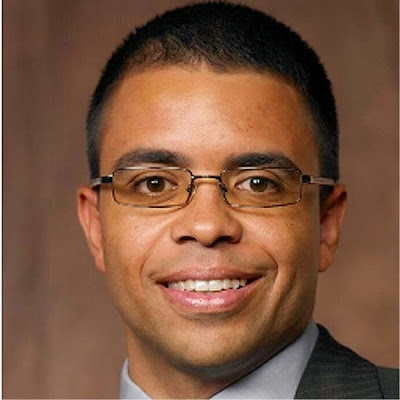
I was happy to see that my friend Denise Oliver Perez showcased Mr. Adegbile (and the backlash he's getting from the nativists) today. Here's a little about his background from the Leadership Council on Civil and Human Rights.
Mr. Adegbile will have some big shoes to fill following the stellar work of Thomas Perez. But based on what I've read about him, he's up to the task. Keep your eye on this young man. And thank you President Obama for another fantastic appointment!

I was happy to see that my friend Denise Oliver Perez showcased Mr. Adegbile (and the backlash he's getting from the nativists) today. Here's a little about his background from the Leadership Council on Civil and Human Rights.
Debo Adegbile is one of the preeminent civil rights litigators of his generation and a bipartisan consensus builder. His experience as the two-time defender of the Voting Rights Act in the Supreme Court puts him in a class of his own when it comes to understanding the application and enforcement of complex civil rights issues. Add that to his stellar career over ten years at the nation’s leading civil rights law firm—the NAACP Legal Defense and Educational Fund—as well as his work in the Senate and in the private sector, and it becomes clear that Adegbile’s skill set, talents, and experience make him the perfect choice to head the Civil Rights Division.As I have often said, we tend to focus on legislative action when evaluating presidential accomplishments. But the primary job of POTUS is to administer the federal government. Nowhere is this more important than in the preservation and advancement of civil rights in this country.
Adegbile’s life mirrors that of the American Dream. A son of immigrants from Ireland and Nigeria, Adegbile grew up in poverty with periods of homelessness to work his way through law school and one day defend American democracy in the Supreme Court.
Millions of Americans rely on the Civil Rights Division to enforce housing, education, and employment discrimination laws, hate crime laws, the Violence Against Women Act, the Americans with Disabilities Act, and the core civil rights statutes that allow all of us to take part in the fullness of American life. Debo Adegbile is the right nominee to head the Civil Rights Division. We call on the Senate to swiftly confirm him.
Mr. Adegbile will have some big shoes to fill following the stellar work of Thomas Perez. But based on what I've read about him, he's up to the task. Keep your eye on this young man. And thank you President Obama for another fantastic appointment!
Monday, August 12, 2013
AG Holder to take another step in ending the war on drugs
Back in 2010, Congress passed and President Obama signed the Fair Sentencing Act - reducing the discrepancy between sentencing for crack and powder cocaine. Attorney General Holder then went on to ensure that it was applied retroactively to those already serving disparate sentences.
Then in April this year, the Obama administration launched a Drug Policy for the 21st Century.
Then in April this year, the Obama administration launched a Drug Policy for the 21st Century.
While law enforcement will always play a vital role in protecting our communities from drug-related crime and violence, we simply cannot incarcerate our way out of the drug problem. Put simply, an enforcement-centric “war on drugs” approach to drug policy is counterproductive, inefficient, and costly.Tonight AG Holder will give a speech in which he will announce the end of the use of mandatory minimum prison sentences for low level drug users.
In a major shift in criminal justice policy, the Obama administration will move on Monday to ease overcrowding in federal prisons by ordering prosecutors to omit listing quantities of illegal substances in indictments for low-level drug cases, sidestepping federal laws that impose strict mandatory minimum sentences for drug-related offenses.Please notice that AG Holder has found a way to do this without Congressional action. And so despite our current state of gridlock perpetuated by Republican obstruction, this administration is continuing their efforts to end the war on drugs.
Attorney General Eric H. Holder Jr., in a speech at the American Bar Association’s annual meeting in San Francisco on Monday, is expected to announce the new policy as one of several steps intended to curb soaring taxpayer spending on prisons and help correct what he regards as unfairness in the justice system, according to his prepared remarks.
Saying that “too many Americans go to too many prisons for far too long and for no good law enforcement reason,” Mr. Holder is planning to justify his policy push in both moral and economic terms.
“Although incarceration has a role to play in our justice system, widespread incarceration at the federal, state and local levels is both ineffective and unsustainable,” Mr. Holder’s speech says. “It imposes a significant economic burden — totaling $80 billion in 2010 alone — and it comes with human and moral costs that are impossible to calculate.”
Mr. Holder will also introduce a related set of Justice Department policies that would leave more crimes to state courts to handle, increase the use of drug-treatment programs as alternatives to incarceration, and expand a program of “compassionate release” for “elderly inmates who did not commit violent crimes and have served significant portions of their sentences.”
Subscribe to:
Posts (Atom)
Immigrants and domestic migrants could be major factors in the Texas Senate race.
A few weeks ago I wrote about how MAGA influencers are trying to convince their base that - despite Trump's growing disapproval rates -...

-
 I've read the entire suit Disney filed against DeSantis - which you can find here . One of the most notable things is that it is written...
 -
 On Monday DeSantis held a press conference to announce the vengeance he seeks after the Mouse House pulled a fast one and basically stripped...
 -
 I just learned that Phoebe Snow died today. She's always been one of my favorites. Here's a bit about her life. Known as a fol...