Showing posts with label President Obama leadership. Show all posts

Saturday, January 10, 2015

A Pragmatist's View of Change: Incentivizing Reform

Paul Glastris, Editor-in-Chief of the Washington Monthly, has written an important article in the current edition of the magazine. Here's the money quote:
But for the most part today’s left-leaning progressives are almost entirely focused on politics, economic justice, social issues, and the influence of money in politics. These are important subjects. But the vast complex of government is largely a black box to these folks. Other than defending the idea of government against anti-government conservatives, getting rid of the filibuster, reforming the primary system, and occasionally calling for more “accountability” and “transparency,” they would be hard pressed to articulate any coherent vision of how to reform the government we have, or any real understanding of how the damn thing works.

What I’m saying is this: there are energies being unleashed today that give the country a shot at reforming itself. But reform can’t and won’t happen until the left takes government—its structure and functioning—far more seriously, and until the right develops a stronger pro-government wing that can win over conservative supporters and compete with Democrats, challenging their blind spots while partnering on needed reforms.
This is exactly why I've been saying for years now that the best way to promote a liberal agenda is to demonstrate that government works. As Glastris suggests, the place to start is to understand "how the damn thing works." But the real challenge is to find a way to make large bureaucratic systems change. A systemic view tells us that there is always a natural tendency towards homeostasis. Systems fight change with every fiber of their being. So how does it happen?

Pondering that took me back to something Jim Stuart wrote almost a year ago about his observations on how Obamacare was impacting health care providers.
Healthcare providers are moving away from fee-for-service towards just emerging new service and payment forms that will reward quality, coordination of care, and new delivery methods that reduce system utilization. They are moving to EHR (electronic health records) aggressively, which will enable this productivity improving, cost-curve bending, system-wide change. In fact, I believe this highly complex system (medical care delivery) is beginning to self-organize around a new productivity improvement identity; that the cost curve bending is taking on a life of its own, and that the "half-life" of this system change will be long. This is the complete opposite of top-down, command-and-control org change. This is almost the only kind of big org change that works.
What he's talking about when he refers to "the only kind of big org change that works" is the process of providing incentives that make it in everyone's self interest to change. Rather than a top-down command-and-control process where the leader prescribes the changes that are necessary, a pragmatic leader identifies the outcomes that are desired and then incentivizes the system to change itself from the bottom up.

It should probably come as no surprise to us that our current Community Organizer-in-Chief has chosen methods of reform that incentivize change by appealing to people's self-interest.


Understanding that approach makes it clear how President Obama is attempting to reform our K-12 education system. Especially given the nature of local control when it comes to schools, any attempt to prescribe changes from the top would be ineffective. Instead, the President initiated something called Race to the Top, which laid out broad goals and incentivized schools to engage in the process of reform. For results, you can take a look at the Department of Education's most recent report on the program. I'll simply highlight these improvements:
At 80 percent, America’s high school graduation rate is the highest on record. Student test scores on the National Assessment of Educational Progress (NAEP) are the highest since the test was first given 20 years ago. There have been double- digit gains on state tests at some of the lowest-performing schools – many of which had not seen any improvement for decades. And some of the largest gains have come in the places that have done the most to embrace reform, such as Tennessee and the District of Columbia.
Providing incentives isn't always a matter offering rewards. We all know that the reason Iran came to the negotiating table over nuclear weapons was because they were incentivized to do so by crippling global economic sanctions. And incentives don't always work - as we saw with the Veteran's Administration where the goals were unrealistic and effective oversight was not provided.

But to ensure a government that works via reform, it's important to develop a theory of how change happens in bureaucratic systems. A pragmatic approach to that is to keep a focus on the outcomes you are seeking and then incentivize people in those systems to work towards change in ways that meet their own self interests.

Tuesday, December 23, 2014

President Obama's to-do list: Lock in the Obama coalition for the Democrats

Ron Brownstein got a great quote from the White House.
One senior Obama adviser says the administration "To Do list" after 2012 included thinking "about how you lock in the Obama coalition for Democrats going forward. Because it's not a 100 percent certainty that they come out for the next Democrat." Part of the answer, the adviser said, was to pursue aggressive unilateral action on "a set of issues where we have an advantage … and believe are substantively the right thing to do" and dare Republicans to oppose him.
 In one fell swoop that knocks out two recent narratives coming from D.C. pundits:
  1. That Democrats should focus on winning back white working class voters. Really, people...talk about going backwards. That is exactly the dynamic that played out in the 2008 primary against Hillary Clinton and the general election against McCain. Take a look at who won!
  2. The more recent narrative that President Obama's executive actions are simply a reaction to the Democratic losses in the 2014 midterms. As I pointed out before, they have all been in the works for at least 1-2 years.
As we've seen so often in the past from this President, he isn't buying in to the fear-mongering about those awful Republicans and the threat they pose. As any Aikido master would do, he's stepping right into the center of the conflict and daring his opponent to oppose him. He knows that the white male patriarchy is simply lashing out in its death throes - and that the best way to defeat them is to expose their game.

I understand that most D.C. pundits aren't ever going to understand a strategy like that. But make no mistake, President Obama knows exactly what he's doing! He's going all-in on this country moving forward. 

Tuesday, December 2, 2014

A nugget of hope from Chris Rock

In a less quoted portion of Chris Rock's interview with Frank Rich, I think he nailed what is driving the confederate insurgency absolutely bonkers.
...my kids grew up not only with a black president but with a black secretary of State, a black joint chief of staff, a black attorney general. My children are going to be the first black children in the history of America to actually have the benefit of the doubt of just being moral, intelligent people.
President Obama has said that he's not interested in leading a national conversation on race. He's busy having a different kind of conversation that's going right over the heads of most pundits who are whining about leadership.


Welcome to the club, Charles!

I've always thought that when I grow up, I want to be a writer like Charles Pierce. No one - but NO ONE - does a take-down better than he does. Todays match-up has him taking Dana Milbank to the matt. But Dana is just one in a long line of folks who are getting their bubbles burst for ridiculous notions about presidential leadership. When Pierce suggests that we're about to read a quote from "Maureen Dowd's Ye Old Shoppe of Daddy Issues," you know its best to just sit back and enjoy the ride.

Here's where Pierce gets to the point:
The country doesn't want a conversation on race, especially one led by the blah president whose simple legitimacy has been under assault since the moment his hand came off the Bible. The country doesn't want a conversation on race unless it is sure from the outset that white people will "win" it. The idea that the president could jump-start this conversation, let alone "give voice" to black people's complaints about (largely) white policemen who are killing them, and not be greeted with the shitstorm sharknado of all time, is so fantastical that it makes me wonder whether I even read Milbank correctly...We're not having a serious conversation about race because, as a nation, we're a bunch of chickenshits who aren't interested in being citizens ourselves, let alone extending that title to people whom we consider less than we are.
Pierce is one writer who never leaves you wondering exactly where he stands. That is a thing of beauty when he speaks the truth so clearly. Put it right alongside AG Holder's bold statement about America being a "nation of cowards" and you get the message.

Pierce's last line is a lead-in to an awareness he has recently had about President Obama's leadership style.
It didn't become clear to me until I heard the president accept his nomination for the second time. He referred to "the hard and necessary work of self-government." Put simply, in so many areas, the president is putting the responsibility of governing -- of Leadership (!)tm -- on us, which is where it should be. We shouldn't need a president to start a conversation on race. We should start it ourselves, in thousands of town halls and church basements and radio talk-shows. But, as a self-governing democracy, we are too cowardly to do it honestly, because it rubs up against the comfortable myth of American exceptionalism. We should make him do things, not the other way around. That's been the fundamental challenge of him from the outset. He's left the hard and necessary work of self-government to a country that simply is no longer up to the job.
Of course, I have been talking about the President's commitment to citizenship and partnership for a long time now...just not with the umph Pierce brings to the table. So...welcome to the club, Charles!!!

Saturday, November 22, 2014

"If you can keep your head when all about you are losing theirs"

I'm going to give Colbert King the benefit of the doubt and assume that he had the best of intentions when he wrote The lessons of November 1963. But seriously...comparing our current situation to the moments after President John F. Kennedy was assassinated is WAY over the top and dangerously inflammatory.

Right now, President Obama and the Democrats are going about the business of governing in a terribly polarized political environment. On the other side of the isle is a party with no solutions that is having a massive freak-out. Some of their people are comparing temporary relief to 5 million undocumented immigrants to Japanese internment camps, suggesting the possibility of ethnic cleansing and warning of violence and anarchy. Instead of all the hype, these guys could simply do what President Obama has suggested over and over again...Pass A Bill (i.e., try governing themselves).

The very last thing we need right now is for people to start comparing all that to a presidential assassination and transfer of power. It invites us to join in the hysteria rather than provide an alternative. In other words, it inflames rather than enlightens.

A much better approach is the one that embodies exactly how President Obama tends to handle these kinds of things. It comes from the poet Rudyard Kipling.

If, A Father's Advice to His Son

If you can keep your head when all about you
Are losing theirs and blaming it on you,
If you can trust yourself when all men doubt you,
But make allowance for their doubting too;

If you can wait and not be tired by waiting,
Or being lied about, don't deal in lies,
Or being hated, don't give way to hating,
And yet don't look too good, nor talk too wise

If you can dream - and not make dreams your master;
If you can think - and not make thoughts your aim;
If you can meet with Triumph and Disaster
And treat those two impostors just the same;

If you can bear to hear the truth you've spoken
Twisted by knaves to make a trap for fools,
Or watch the things you gave your life to, broken,
And stoop and build 'em up with worn-out tools...

If you can talk with crowds and keep your virtue,
Or walk with Kings - nor lose the common touch,
If neither foes nor loving friends can hurt you,
If all men count with you, but none too much;

If you can fill the unforgiving minute
With sixty seconds' worth of distance run,
Yours is the Earth and everything that's in it,
And - which is more - you'll be a Man, my son!

Sunday, November 9, 2014

Going Forward: Division or Hope?

Leonard Pitts pretty much nails his post-mortem about the 2014 elections in a column titled: Cynicism won midterm elections.
The Democrats had nothing to say and said it ineptly, running from the achievements of recent years — the Affordable Care Act, falling unemployment rates, a soaring stock market — and the president who presided over them like Usain Bolt from a house fire...

The Republicans also had nothing to say, but they said it loudly and with great certitude: “Obama caused Ebola! Obama caused ISIS! Obama is going to give your job to an illegal! GOP: 2014!”...

Cowardice squared off against cynicism Tuesday, and cynicism won. But there is something wrong when those are the only options on the ballot.
Now that its clear that cowardice lost (DUH!), lots of Democratic strategists are thinking that perhaps its time to fuel division as the answer: blacks vs whites, Main St. vs Wall St., men vs women, etc.

I'd like to remind everyone about the single most important reason that Barack Obama is our president today.


Its become "conventional wisdom" that Obama got elected because he opposed the war in Iraq. To that I'd say...no one would have ever heard about that position if it weren't for this speech. It roused a divided nation to a higher ideal...and gave us hope in a better future. 

Here's Pitts again:
People for whom everything is about politics tend to forget that most of us do not see the world that way. Red or blue, left or right, most Americans simply want a government that works, that gets things done, and a nation that stands for something, that means something in the world beyond just a parcel of land where a bunch of people live.

This is why Obama’s words electrified 10 years ago; they seemed to connect people to ideals larger than their own lives.
If you think that a few years in Washington D.C. made President Obama less "naive" about all this, listen to what he said at the end of his 2012 victory speech.


At about 20:25:
I have never been more hopeful about America. And I ask you to sustain that hope. I'm not talking about blind optimism, the kind of hope that just ignores the enormity of the tasks ahead or the roadblocks that stand in our path. I'm not talking about the wishful idealism that allows us to just sit on the sidelines or shirk from a fight.

I have always believed that hope is that stubborn thing inside us that insists, despite all the evidence to the contrary, that something better awaits us so long as we have the courage to keep reaching, to keep working, to keep fighting...

I believe we can seize this future together because we are not as divided as our politics suggests. We're not as cynical as the pundits believe. We are greater than the sum of our individual ambitions, and we remain more than a collection of red states and blue states. We are and forever will be the United States of America.
More than anything else, President Obama's message has always been that - no matter what divides us (race, gender, class, ideology, religion etc) - there is something deeper that unites us. When we tap into that, we can find the courage and hope to actually listen to each other and address our differences.

As Pitts points out in his column, all that seems "flatter than a left-out cola" right now. But its exactly what Rev. Joseph Lowery called "good crazy."


So as we begin to think about how to go forward in this country once President Obama's second term is over, I'll be looking for a little "good crazy." In other words, people who understand - as Rubem Alves once said - that "the frontiers of the possible are not determined by the limits of the actual." Now that I've had the experience of being led by someone like that, I'm not interested in going back to cynicism, cowardice and division.

Wednesday, October 29, 2014

An Introvert as President (updated)

Joshua Green certainly stirred things up with his article about how "Obama is too cool for crisis management." I encourage you to read responses from both Matt Yglesias and Danny Vinik. But what Green did is simply magnify the story many in the media tell us about President Obama - that he is cool, aloof, cerebral, disengaged and remote.

What none of them seem to be aware of or acknowledge is that this President is actually an introvert in a world that values extroverts. If you have any doubts about that, listen to an introvert - Susan Cain - talk about her own experience and provide us with some history of how/why our attachment to extroversion came about.


Speaking as an introvert myself, I understand the judgements extroverts often make about us. I too thought there was something wrong with me as I recoiled from what felt like the mania of others. Until I was able to learn to value introversion, I thought of myself as lazy, disengaged and an observer rather than a participant. That's what it means to be an introvert in a culture where being social and outgoing are prized above all else.

But take a look at one of the definitions of introversion:
The act of directing one's interest inward or to things within the self.
That's not an act of selfishness (another critique often leveled at introverts), its about finding your own authenticity. And so I'm reminded of Jon Favreau's response to a question about whether or not President Obama is "remote."
I think that the remoteness thing comes from...he doesn't do artifice well. He doesn't do schtick well, right? It goes back to that authenticity thing. He knows who he is, he believes who he is and he's not going to put on some facade just because he's supposed to glad-handle someone. He would rather actually get to know that person...talk to them, have a real conversation - not recite talking points - and enjoy that person's company.
Introverts are fascinated by the lives and stories of other people. We simply have a low tolerance for the superficial. Because we value authenticity, we don't tend to excel at the games that are often played by both co-dependents and the powerful elite. Here's what Michael Lewis noticed about President Obama.
His desire to hear out junior people is a warm personality trait as much as a cool tactic, of a piece with his desire to play golf with White House cooks rather than with C.E.O.’s and basketball with people who treat him as just another player on the court; to stay home and read a book rather than go to a Washington cocktail party; and to seek out, in any crowd, not the beautiful people but the old people. The man has his stat­us needs, but they are unusual. And he has a tendency, an unthinking first step, to subvert established stat­us structures.
This is a good example of how stories of meaning are developed. If you view President Obama through the lens of assumptions about the superiority of extroversion, the story you tell will be about his deficiencies in leadership. But if - like Susan Cain does in the video above - you can find the value of introverts in today's world, you'll tell a whole different story...one of competence.

UPDATE: Hat tip to Delna for this:
John Heilemann is quoted as saying this:
I don't think he doesn't like people. I know he doesn't like people. He's not an extrovert; he's an introvert. I've known the guy since 1988. He's not someone who has a wide circle of friends. He's not a backslapper and he's not an arm-twister. He's a more or less solitary figure who has extraordinary communicative capacities.
That's classic of what extroverts say about introverts - that they don't like people. When - as Favreau and Lewis pointed out above - what they don't like is game-playing, superficiality and artifice.

Funny, but I'm old enough to remember when pundits and conservatives were actually scandalized by the fact that President Obama enjoyed dinner parties  with intellectuals where the conversation went deep into the night ;-) That's classic introversion.

What Heilmann gets right is that introverts don't tend to have a wide circle of friends. What they usually have is a small group of friends with whom the attachment goes deep.

Tuesday, September 23, 2014

Never mistake a paragraph with the entire story

Have you ever known someone who had a great vision for the future but was completely clueless about how to get there? I sure have. They tend to make grand promises but very rarely follow through with actual progress. Real leadership requires not only vision, but the skills to develop strategies that form steps towards the goal.

In the beginning, an awful lot of people were inspired by Barack Obama's vision for America. Since then, too many have become discouraged that he hasn't gotten us there yet. I would suggest that they missed this part of his victory speech on election night 2008.
The road ahead will be long. Our climb will be steep. We may not get there in one year or even one term, but America – I have never been more hopeful than I am tonight that we will get there. I promise you – we as a people will get there.

There will be setbacks and false starts. There are many who won't agree with every decision or policy I make as President, and we know that government can't solve every problem. But I will always be honest with you about the challenges we face. I will listen to you, especially when we disagree. And above all, I will ask you join in the work of remaking this nation the only way it's been done in America for two-hundred and twenty-one years – block by block, brick by brick, calloused hand by calloused hand.

What began twenty-one months ago in the depths of winter must not end on this autumn night. This victory alone is not the change we seek – it is only the chance for us to make that change. And that cannot happen if we go back to the way things were. It cannot happen without you.
First of all, he was clear that it was never "Yes He Can," it was always "Yes We Can." But secondly, there was that part about "block by block, brick by brick, calloused hand by calloused hand." He was talking about the step-by-step strategies that would be necessary to enact our vision.

President Obama explained his own process of breaking goals down into strategies when he addressed the young people at his town hall meeting on the My Brother's Keeper initiative.
And the truth is I still set goals every day. Every morning, I’ve got a checklist of here are the things that I need to get done. And it starts off with big goals -- so let’s just take My Brother’s Keeper. My goals is to make sure that every young person in America, if they’re putting in the effort, they can succeed, and they’ve got ladders of opportunity to take them where they want to go regardless of what their talents or interests are. So that’s a big goal. That’s a 40,000-foot goal.

But if I just stay there, I’m not going to get it done, right? So then I’ve got to break it down into, well, what are the component parts of that? Well, number one, I’ve got to make sure the school system works well. So then I’m going to talk to my Secretary of Education and I’m going to say, what are our goals this year in terms of improving whether it’s early childhood education, or making sure that young people can read at grade level by the time they’re in 3rd grade, or what have you.

But then it’s also there’s a criminal justice component to it, because I’m trying to figure out how do we get more young men into college and fewer of them into jail, which means that I’ve then got to talk to the Attorney General, Eric Holder, and I’ve got to say, what are our goals for trying to revamp how we think about the interaction between law enforcement and young men of color.

So I’ll break it down into those parts. But that’s still not at the best level, because now I’ve got to say, what’s our specific plan to do it and what am I going to be doing this week, what am I going to be doing this month, and what am I going to be doing this year to get that done. And so you keep on breaking it down from the very general down to the specific. And ideally, what I’m producing then is every day when I wake up I’ve got a checklist of here are the specific things I’m going to do today to achieve my goal.
I would suggest that much of the disappointment we're seeing today comes from those who have failed to make the connection between what is on President Obama's "to-do list" today with that grand vision. You've probably heard the old adage about the difficulty of turning the poetry of campaigning into the prose of governing. That's exactly the challenge I'm talking about. A single step viewed in isolation often bears very little resemblance to the vision at the end of the journey - but that's where it has to start.

Because President Obama's vision is about building rather than destroying, it is a slower and more deliberative process. He is also secure enough in himself to be able to incorporate a vision that will last beyond his own tenure in the White House.
“I think we are born into this world and inherit all the grudges and rivalries and hatreds and sins of the past,” he said. “But we also inherit the beauty and the joy and goodness of our forebears. And we’re on this planet a pretty short time, so that we cannot remake the world entirely during this little stretch that we have.” The long view again. “But I think our decisions matter,” he went on. “And I think America was very lucky that Abraham Lincoln was President when he was President. If he hadn’t been, the course of history would be very different. But I also think that, despite being the greatest President, in my mind, in our history, it took another hundred and fifty years before African-Americans had anything approaching formal equality, much less real equality. I think that doesn’t diminish Lincoln’s achievements, but it acknowledges that at the end of the day we’re part of a long-running story. We just try to get our paragraph right.”
We should never mistake a paragraph with the entire story.

Monday, September 15, 2014

President Obama plants the seeds of hope

Here is one of my favorite quotes of all time from Rubem Alves.
What is hope? It is the presentiment that imagination is more real and reality less real than it looks. It is the suspicion that the overwhelming brutality of fact that oppresses us and represses us is not the last word. It is the hunch that reality is more complex than the realists want us to believe, that the frontiers of the possible are not determined by the limits of the actual, and that, in a miraculous and unexpected way, life is preparing the creative events which will open the way to freedom and to resurrection.

But, hope must live with suffering. Suffering, without hope, produces resentment and despair. And hope, without suffering, creates illusions, naiveté, and drunkenness. So, let us plant dates, even though we who plant them will never eat them. We must live by the love of what we will never see.
I am reminded of that quote when I realize that wherever President Obama goes around the globe, he always makes sure to address young people. It is clear that in them, he sees the seeds of hope that will outlast his time on the international stage. Here are just a few examples of what he's had to say.

Cairo, Egypt 2009
The issues that I have described will not be easy to address. But we have a responsibility to join together on behalf of the world that we seek -- a world where extremists no longer threaten our people, and American troops have come home; a world where Israelis and Palestinians are each secure in a state of their own, and nuclear energy is used for peaceful purposes; a world where governments serve their citizens, and the rights of all God's children are respected. Those are mutual interests. That is the world we seek. But we can only achieve it together.

I know there are many -- Muslim and non-Muslim -- who question whether we can forge this new beginning. Some are eager to stoke the flames of division, and to stand in the way of progress. Some suggest that it isn't worth the effort -- that we are fated to disagree, and civilizations are doomed to clash. Many more are simply skeptical that real change can occur. There's so much fear, so much mistrust that has built up over the years. But if we choose to be bound by the past, we will never move forward. And I want to particularly say this to young people of every faith, in every country -- you, more than anyone, have the ability to reimagine the world, to remake this world.
Rio de Janeiro, Brazil 2011
But for our two nations, for the United States and Brazil, two nations who have struggled over many generations to perfect our own democracies, the United States and Brazil know that the future of the Arab World will be determined by its people.

No one can say for certain how this change will end, but I do know that change is not something that we should fear. When young people insist that the currents of history are on the move, the burdens of the past can be washed away. When men and women peacefully claim their human rights, our own common humanity is enhanced. Wherever the light of freedom is lit, the world becomes a brighter place.

That is the example of Brazil.
University of Cape Town, South Africa 2013
Madiba’s words give us a compass in a sea of change, firm ground amidst swirling currents. We always have the opportunity to choose our better history. We can always understand that most important decision -- the decision we make when we find our common humanity in one another. That’s always available to us, that choice.

And I've seen that spirit in the welcoming smiles of children on Gorée Island, and the children of Mombasa on Kenya’s Indian Ocean coast. That spirit exists in the mother in the Sahel who wants a life of dignity for her daughters; and in the South African student who braves danger and distance just to get to school. It can be heard in the songs that rise from villages and city streets, and it can be heard in the confident voices of young people like you.

It is that spirit, that innate longing for justice and equality, for freedom and solidarity -- that’s the spirit that can light the way forward.
Jerusalem 2013
We bear all that history on our shoulders. We carry all that history in our hearts. Today, as we face the twilight of Israel’s founding generation, you -- the young people of Israel - must now claim its future. It falls to you to write the next chapter in the great story of this great nation.

And as the President of a country that you can count on as your greatest friend - I am confident that you can help us find the promise in the days that lie ahead. And as a man who’s been inspired in my own life by that timeless calling within the Jewish experience -- tikkun loam - I am hopeful that we can draw upon what’s best in ourselves to meet the challenges that will come; to win the battles for peace in the wake of so much war; and to do the work of repairing this world.
Brussels, Belgium 2014
And it is you, the young people of Europe, young people like Laura, who will help decide which way the currents of our history will flow. Do not think for a moment that your own freedom, your own prosperity, that your own moral imagination is bound by the limits of your community, your ethnicity, or even your country. You’re bigger than that. You can help us to choose a better history. That’s what Europe tells us. That’s what the American experience is all about.
President Obama has given that same message numerous times to young people during commencement addresses here in the United States. But he has never articulated it more powerfully than he did at his campaign headquarters the day after his re-election in 2012.

Over the last four years when people ask me "how do you put up with this or that - with the frustrations of Washington" - I just think about you. I think about what you guys are gonna do. And that's the source of my hope. That's the source of my strength and my inspiration.
People who seek positions of leadership simply to fill their own ego needs can only see the results in the "now" of their accomplishments and failures. Real leaders know that it also includes planting the seeds of hope...for the future.

Thursday, September 11, 2014

"We have to make decisions based not on fear, but on hard-earned wisdom"

Up at the top of this blog you'll see a tab titled Ending the Indefinite War. For almost three years now I have been advocating that its time to start talking about ending what George Bush called "the global war on terror" and what President Obama refocused as the "war on al Qaeda." The explosion of ISIS on the scene in Iraq and Syria means that is unlikely to happen anytime soon. And so I'm dealing with my disappointment in having to let that go. But my disappointment is not directed at President Obama. It is focused where it belongs...on ISIS.

Back in May of 2013, President Obama gave a speech that indicated perhaps we could finally start talking about ending the indefinite war. I was ecstatic at the possibility. In my elation, I didn't focus as much on the reality that his speech was really an outline of how we move forward with a rational counterterrorism strategy. And so today I went back and re-read the speech. Its interesting to listen to what the President said about all this more than a year before he announced his plan for military intervention against ISIS. Take a look at some highlights.
Now, make no mistake, our nation is still threatened by terrorists. From Benghazi to Boston, we have been tragically reminded of that truth. But we have to recognize that the threat has shifted and evolved from the one that came to our shores on 9/11. With a decade of experience now to draw from, this is the moment to ask ourselves hard questions -- about the nature of today’s threats and how we should confront them...

So America is at a crossroads. We must define the nature and scope of this struggle, or else it will define us. We have to be mindful of James Madison’s warning that “No nation could preserve its freedom in the midst of continual warfare.” Neither I, nor any President, can promise the total defeat of terror. We will never erase the evil that lies in the hearts of some human beings, nor stamp out every danger to our open society. But what we can do -- what we must do -- is dismantle networks that pose a direct danger to us, and make it less likely for new groups to gain a foothold, all the while maintaining the freedoms and ideals that we defend. And to define that strategy, we have to make decisions based not on fear, but on hard-earned wisdom. 
The President went on to propose a comprehensive counterterrorism strategy. He gave a lot of details, but summed it up here:
Targeted action against terrorists, effective partnerships, diplomatic engagement and assistance -- through such a comprehensive strategy we can significantly reduce the chances of large-scale attacks on the homeland and mitigate threats to Americans overseas.
That has been President Obama's strategy all along. In that speech he invited us to ask the hard questions. Unfortunately, that has not happened. Instead we have had ongoing prescriptions from left libertarians who pretend like we can just ignore the problem and neocons who think every problem can be solved by simply invading yet another country. I believe that last night's speech from the President was an attempt to tamp down the fear so that perhaps we could get in touch with some of that hard-earned wisdom.

To be honest, I don't know if the President has chosen the right strategy for dealing with ISIS. I long for a discussion about what our options are that is based on seeing the situation as clearly as he laid it out over a year ago. Anyone who tells you that Obama's plan is either guaranteed to be a success or doomed to failure don't know what they're talking about. They are simply mouthing the surety of the ideologue.

What I do know is that by the time President Obama has made a tough decision like this, he's weighed all of his options and calculated the possible unintended consequences of each one. As he did when he made the decision to go after Osama bin Laden, he knows that at times like this, the risks of failure are very real and the consequences of that failure could be devastating. But until I see critiques apply the same process to their alternatives, I'll go with the guy who has demonstrated a pretty solid grasp of hard-earned wisdom.

Friday, September 5, 2014

President Obama: Finding Common Ground

I have to say that the threat posed by ISIS in Syria and Iraq has resulted in some fascinating changes to the dynamics in the Middle East. As we all should know by now, much of the conflict in that region has its roots in the divide between Sunni and Shia Muslims. Countries like Saudi Arabia (dominated by Sunni) have provided support to terrorist groups like ISIS who are fighting against the Shia-ruled countries of Iraq, Syria and Iran.

But then ISIS got out of hand. And now Sunni and Shia have found some common ground and are coming together to fight them. This is creating the possibility of a coalition President Obama is developing as his strategy to defeat ISIS.
American officials are hoping to expand the coalition against ISIS to include as many countries as possible, particularly in the region...

Enlisting the Sunni neighbors of Syria and Iraq is crucial, experts said, because airstrikes alone will not be enough to push back ISIS. The Obama administration is also seeking to pursue a sequential strategy that begins with gathering intelligence, and is followed by targeted airstrikes, more robust and better-coordinated support for moderate rebels, and finally, a political reconciliation process.
This is the Obama Doctrine at work - much as we've seen it create the coalition of countries imposing sanctions that brought Iran to the negotiating table as well as punish Russia for their incursions into Ukraine.  The difference between this example and the others, however, is that the end game is the destruction of ISIS rather than a negotiated settlement of differences.

However, after having worked together to defeat ISIS, you can bet that President Obama will attempt to use that same coalition to develop the "new equilibrium" he discussed with David Remnick that would both prevent extremism and benefit the citizens of their countries.
Ultimately, he envisages a new geopolitical equilibrium, one less turbulent than the current landscape of civil war, terror, and sectarian battle. “It would be profoundly in the interest of citizens throughout the region if Sunnis and Shias weren’t intent on killing each other,” he told me. “And although it would not solve the entire problem, if we were able to get Iran to operate in a responsible fashion...you could see an equilibrium developing between Sunni, or predominantly Sunni, Gulf states and Iran in which there’s competition, perhaps suspicion, but not an active or proxy warfare...

If you can start unwinding some of that, that creates a new equilibrium. And so I think each individual piece of the puzzle is meant to paint a picture in which conflicts and competition still exist in the region but that it is contained, it is expressed in ways that don’t exact such an enormous toll on the countries involved, and that allow us to work with functioning states to prevent extremists from emerging there."
There is a theme to President Obama's message here that he constantly comes back to. It might best be summarized by this quote from Guatama Buddha:
Holding onto anger is like drinking poison and expecting the other person to die.
Our shared histories, be it in this country or around the globe, have given us many excuses to be angry.  But hanging on to that anger poisons us. To be able to move forward means letting go of the divisions that anger creates. Here's how President Obama talked about that in Cairo back in 2009.
So long as our relationship is defined by our differences, we will empower those who sow hatred rather than peace, those who promote conflict rather than the cooperation that can help all of our people achieve justice and prosperity. And this cycle of suspicion and discord must end.

I've come here to Cairo to seek a new beginning between the United States and Muslims around the world, one based on mutual interest and mutual respect, and one based upon the truth that America and Islam are not exclusive and need not be in competition. Instead, they overlap, and share common principles -- principles of justice and progress; tolerance and the dignity of all human beings.
He made a similar point in this speech about racism during the 2008 election.
I chose to run for president at this moment in history because I believe deeply that we cannot solve the challenges of our time unless we solve them together, unless we perfect our union by understanding that we may have different stories, but we hold common hopes; that we may not look the same and we may not have come from the same place, but we all want to move in the same direction — toward a better future for our children and our grandchildren.
As he's said many times, this doesn't mean ignoring our history or pretending like the differences don't exist. As a matter of fact, he often tells us that conversations that go on about that behind closed doors need to come out into public view.
But I am convinced that in order to move forward, we must say openly to each other the things we hold in our hearts and that too often are said only behind closed doors. There must be a sustained effort to listen to each other; to learn from each other; to respect one another; and to seek common ground.
Its that "common ground" that is the key for President Obama.  He believes that "what unites us is always greater than what divides us." That's because his own personal journey meant finding that common ground inside himself - the son of a black Kenyan and white Kansan.

Letting go of the old anger and divisions is difficult. A lot of the backlash we see against President Obama is a result of people clinging to that old anger as if their lives depended on it. But one of the most beautiful moments I've heard in the last six years came as Rev. Gordon Stewart described his own personal letting go during the 2009 inauguration ceremony.
They are strange tears, like none other I have ever felt. It confuses me. I wonder what they're about. It feels like joy. A joy I have not felt for a long time. Joy... and hope... that something really new is happening. Joy that all the struggles and all the marches that wore holes in my generation's shoes on behalf of civil rights and peace have brought us to this indescribably holy moment that transcends the old divisions.

For sure, the tears that rise up in me are tears of joy. But they're also about something else. They feel like the convulsing sobs of a prisoner released from prison. They come from a hidden well of poison -- the well of deep grief stuffed away over all the years because of all the marches, all the beatings, all the blood, the well of buried anger -- the silent tears of grief over the America we had almost lost.

Then I realize: Only the appearance of joy and hope can release such deep grief. It was the joy on Yo-Yo Ma's face that finally released the poison locked inside my soul. It is the joy and hope of a new generation that's able to take us where my generation cannot -- free of the taint of sore feet and scars and old grudges the new President says we must move past.
Rev. Stewart recognizes that it is likely up to a new generation - free of the poison from the past - that will be able to lead us to that common ground. This is something that President Obama regularly suggests both at home and abroad. But for us oldies who are interested in letting go of the past so that we can move forward, note that for Rev. Stewart, it was "the appearance of joy and hope" that released the deep grief. That's where we'll find our North Star.  

Sunday, August 24, 2014

On patriotism and dissent

Today I ran across a speech that candidate Barack Obama gave in June 2008 on the topic of patriotism. We'll just leave alone the irony of the fact that he gave that speech in Missouri. But one of the things he talked about is that patriotism is often defined by dissent to our government/leaders.
Of course, precisely because America isn't perfect, precisely because our ideals constantly demand more from us, patriotism can never be defined as loyalty to any particular leader or government or policy. As Mark Twain, that greatest of American satirists and proud son of Missouri, once wrote, "Patriotism is supporting your country all the time, and your government when it deserves it." We may hope that our leaders and our government stand up for our ideals, and there are many times in our history when that's occurred. But when our laws, our leaders or our government are out of alignment with our ideals, then the dissent of ordinary Americans may prove to be one of the truest expressions of patriotism.
We can look at that from a couple of different angles. First of all, President Obama has continually supported the right of protesters in Ferguson to assemble and speak their minds about the shooting of Michael Brown and the response of local government officials.

In addition, some people have chosen to speak out against President Obama's response to the events in Ferguson. I'd suggest that he would find their dissent patriotic. But for me the, question arises as to whether or not that kind of dissent is effective.

Not too long ago, the President told young people at his My Brother's Keeper town hall meeting what kinds of critiques he takes to heart. He mentioned three questions he poses:
  1. Does it advance a common goal?
  2. Is it a criticism of what you do rather than who you are?
  3. Does it include a suggestion for how to improve?
We can apply those questions to the critiques we've heard lately. Some of them actually meet these criteria. But when it comes to patriotism, candidate Obama talked about something else he includes:
Beyond a loyalty to America's ideals, beyond a willingness to dissent on behalf of those ideals, I also believe that patriotism must, if it is to mean anything, involve the willingness to sacrifice - to give up something we value on behalf of a larger cause.
 That reminded me of this moment last November.


That is a picture of the President and First Lady visiting the people involved in Fast 4 Families. At the time this happened, I noted that it was likely the first time a sitting president showed that kind of support for an activist movement. They got the attention of our "Community Organizer-in-Chief" specifically because they were engaging in the very definition of patriotic dissent. 

Finally, Al Giordano wrote something in response to the speech from Obama that I think is at the heart of the difference between effective and ineffective dissent. 
My duty to the causes I care about is not to cry that we've been victimized, or that "the sky is falling," or to play armchair quarterback shouting from the bleachers at the captain on the field that he must make his next play a run or a pass. Nor is it to yell, "I'm taking my money and support and game board and going home." It is, rather, to inform and organize greater public opinion to grow to see the issue as I see it, so that whenever he may take office, he will have to deal with the reality that we have created with or without him.

People that care deeply and legitimately about misunderstood or unpopular issues like abolition of the death penalty for anyone (even for child rapists), or that Israel has to end its terrible treatment of Palestinians, or that there should be no immunity for telecommunications companies that spy on behalf of the government on Americans that communicate abroad, or fill-in-your-pet-issue-here, have to first educate and organize the citizenry to demonstrably agree with them before they can realistically insist that any political candidate stick his neck onto their pet chopping block.
I've commented before that the great civil rights leaders of our past didn't spend their time calling out politicians for their failures. On everything from bus boycotts to lunch counter sit-ins to breakfasts for pre-schoolers, they spent their time organizing the community...until the politicians had to listen.

Those who think that dissent is all about critiquing what President Obama does/doesn't do forget something every community organizer knows in their bones...

Saturday, August 23, 2014

A pragmatist's musings on ending racism

Racism is a highly-charged emotional issue in this country. Rightly so. But I find it helpful to step back from the emotions every now and then to take a rational pragmatic look at where we are and what our goals should be going forward.

In order to do that, its important to recognize the two broad categories of racism: personal and systemic. Personal racism includes both the covert messages we've all internalized as a result of living in a white supremacist culture as well as overtly racist words/actions. Personal racism is basically a white-people's problem as my friend Robinswing articulated a while ago when she said "We Can't Fix Ya!" Ending personal racism is an individual journey.

I can't speak for anyone else, but that journey for me was initiated and has been maintained by some very patient people of color in my life. I have tried my best on this blog platform to pass those lessons on to the few people who read here. White people are "my people," and its important to me that we eventually get it.

But the truth is, people of color can walk away from personal racism. Unless they care individually or collectively about our opinions, they can chose to ignore us. Even the racist rantings of a Sterling or Bundy or Robertson (Duck Dynasty) are meaningless unless we give them weight.

Ultimately it is systemic racism that impacts people of color directly. It happens when racism becomes embedded, both overtly and covertly, in institutional patterns and practices. Both the Civil War and the Civil Rights movement were successful in ending different forms of systemic racism: slavery and legal segregation. But those patterns and practices have been embedded in our systems of education, health care, housing, employment, immigration and criminal justice.

While personal and systemic racism are certainly intertwined, I believe that the former is a slow process of personal transformation. No one can control when/if another person is open to that process. We can only seize the moments that are presented to us.

But if, as Rev. William Barber has articulated, we are in the midst of a Third Reconstruction, I think it behooves us to focus on further eradication of systemic racism. Others may disagree, but I think the most pressing areas today are in our education, immigration and criminal justice systems.

When viewed in this light, our "talk" about racism should be focused on gaining allies to do the work of dismantling systemic racism (you can see that on display with Rev. Barber's Moral Mondays Movement). This is where the current work of criminal justice reform presents a fascinating opportunity. Conservatives have joined the fight - not to rid the system of racism - but to reduce government spending. There are similar alliances developing with big business on the issues of education and immigration.

Now...if you've been paying attention, you might have seen how President Obama is providing leadership on these issues. His administration is busy advocating for universal pre-K, ending the school-to-prison pipeline, opening up the opportunity for a college education to more young people, passing comprehensive immigration reform, cracking down on police brutality, initiating a clemency initiative, and being Smart on Crime.

When the President's critics - like Michael Eric Dyson - say he needs to step up, use the bully pulpit and provide leadership, what they mean is that he should talk about racism. That is aimed at tackling the personal. For better or worse, this President has decided to focus on the systemic.

Friday, August 8, 2014

Here's your Obama Doctrine

In May President Obama gave a big speech at West Point outlining his approach to foreign policy. Perhaps because it wouldn't fit on a bumper sticker ("You're either with us or against us"), people didn't pay too much attention.

Last night the President summed it all up.
...our leadership is necessary to underwrite the global security and prosperity that our children and our grandchildren will depend upon. We do so by adhering to a set of core principles. We do whatever is necessary to protect our people. We support our allies when they’re in danger. We lead coalitions of countries to uphold international norms. And we strive to stay true to the fundamental values -- the desire to live with basic freedom and dignity -- that is common to human beings wherever they are. That’s why people all over the world look to the United States of America to lead. And that’s why we do it.
You say you want an Obama Doctrine? There it is.

Monday, August 4, 2014

Why President Obama will never listen to folks like Glenn Greenwald


I want to return once again to President Obama's answers to questions from the young people at his My Brother's Keeper town hall. These were some of the most fascinating exchanges I've seen with the President. He opened his own processes up in a way that he's rarely done before. From my own personal experience, that's what mentoring is all about. So perhaps it should come as no surprise given the context.

There was a second half to President Obama's response to the question about how he deals with the judgement of others.
But I do think that one of the things, as you grow up you start trying to figure out, is who gives you constructive criticism because they’re invested in the same things you are but maybe can see some things you can’t, versus folks who are just -- what did somebody say -- hating, somebody just hating, just haters -- I won’t go there, but -- (laughter) -- but people who maybe are providing less constructive criticism where I can’t really use it because no matter what I do, there may be something else that they’re criticizing. The object of it is not to advance a goal.

And so one thing you should learn is if somebody is being constructive in their criticism, usually they’re not criticizing you, they’re criticizing your actions and what you do, and are giving you something specific. So if a coach is coaching Chris and just says, you’re a buster, you can’t play -- that’s not constructive criticism. If they say, Chris, right now you’re dribbling too much and you need to move the ball around because then five guys are going to touch it and we’ll have more motion -- that becomes constructive criticism.

Well, that’s true in your lives as well. So you can usually tell -- if somebody is being constructive, they’re telling you something specific that you can change, that you can test to see if it’s going to make things better. And if they can’t, if all they’re saying is you’re not worth nothing, then that’s probably not something that you want to pay a lot of attention to.
The President laid out a three-pronged approach to determining whether or not someone is providing constructive criticism:
  1. Does it advance a common goal?
  2. Is it a criticism of what you do or who you are?
  3. Does it include a suggestion for how to improve?
Its easy to see how the teapublican's critiques don't pass the smell test on any of these. As long as their over-ridding goal is total obstruction, it isn't even necessary to consider #2 and 3. 

There are times the President's critics on the left share common goals with him. When they're not busy calling him a "war criminal" or a "stooge of Wall Street," they might even focus their criticism on what he's actually done. But the conversation almost never reaches the stage of a real discussion about alternatives. For example, you're not ever likely to hear Glenn Greenwald outline his ideas on a response to al Qaeda or the proper role of spying in a democracy. As long as the critique doesn't include a suggestion for how to improve, its "not something that you want to pay a lot of attention to."
Having watched the President pretty closely for about 6 years, I'd suggest that he has built up a strong enough sense of personal identity that he honestly doesn't let those critiques sink in. Of course he "hears" them, but he doesn't take them personally or give them any agency. Its why he can stay so calm/cool/thoughtful in the face of attacks from both sides. Its also how he avoids getting defensive and is able to maintain a focus on his North Star. 

That is something for all of us - not just the young people he was addressing - to aspire to. 

Tuesday, July 22, 2014

The most unrecognized element of President Obama's legacy

When people consider President Obama's legacy, most often they'll talk about health care reform or saving us from another great depression. But rarely do people cite what BooMan talked about.
I have a theory that when the Republican Party finally collapses as a national party it will happen suddenly and without much warning. It could happen as early as this November, although I am not ready to make that prediction just yet...

But the game is nonetheless up. The best movement conservatism can hope for at this point is a flash in the pan confluence of bad news timed at just the right moment to give them the unlikeliest of national victories. This country has totally moved on from their ideology.
Actually, the country moved on from their economic and foreign policy ideology after the disaster of the Bush/Cheney administration. On cultural issues, it was just a matter of time.

But it didn't have to be this way. From the beginning, President Obama reached out to Republicans to work with him on developing bipartisan responses to the challenges we faced as a country. David Frum lamented the fact that Republicans could have taken another path on health care reform.
At the beginning of this process we made a strategic decision: unlike, say, Democrats in 2001 when President Bush proposed his first tax cut, we would make no deal with the administration. No negotiations, no compromise, nothing. We were going for all the marbles. This would be Obama’s Waterloo – just as healthcare was Clinton’s in 1994...

This time, when we went for all the marbles, we ended with none.

Could a deal have been reached? Who knows? But we do know that the gap between this plan and traditional Republican ideas is not very big...Barack Obama badly wanted Republican votes for his plan. Could we have leveraged his desire to align the plan more closely with conservative views?
As I've written so often, in response to this kind of obstruction, President Obama implemented conciliatory rhetoric as a ruthless strategy. In other words, his outstretched hand demonstrated the intransigence on the Republican side of the isle and left them with no choice but to embrace increasingly marginalized positions in order to justify their obstruction.

Just as Frum speculated on a different course for Republicans, imagine with me for a moment what would have transpired if President Obama had taken the advice of many on the left and decided to fight fire with fire. What if, for example, he had responded to their obstruction by insisting on single payer for health care reform or refused to include tax cuts in the stimulus bill? Don't even THINK about suggesting Republicans would have budged on either of those if he had insisted. Neither side would have prevailed and the resulting chaos would have been a Republican dream come true.

In the end, the Republicans chose their own path of obstruction and increasing marginalization. President Obama's response ensured that would mean their demise...not his. It might take years for us to see the full result of those decisions. But when it all unfolds, it will be one of the most important ingredients of this President's legacy.

Monday, July 14, 2014

Its time to leave home

In 1981 Bernice Johnson Reagon gave a speech that I believe was prophetic titled: Coalition Politics: Turning the Century. She begins by summarizing the impact technology has had on our social constructs:
We’ve pretty much come to the end of a time when you can have a space that is “yours only”—just for the people you want to be there...To a large extent it’s because we have just finished with that kind of isolating. There is no hiding place. There is nowhere you can go and only be with people who are like you. It’s over. Give it up.
David Simon captured how the re-election of Barack Obama sealed this change when he talked about the death of normal.
America will soon belong to the men and women — white and black and Latino and Asian, Christian and Jew and Muslim and atheist, gay and straight — who can walk into a room and accept with real comfort the sensation that they are in a world of certain difference, that there are no real majorities, only pluralities and coalitions. The America in which it was otherwise is dying...
What makes Reagon's words so prophetic is that she talked about what our reaction would likely be to this reality. She warned that it would lead us to create spaces she called "home."
Now every once in awhile there is a need for people to try to clean out corners and bar the doors and check everybody who comes in the door, and check what they carry in and say, “Humph, inside this place the only thing we are going to deal with is X or Y or Z.” And so only the X’s or Y’s or Z’s get to come in...

But that space while it lasts should be a nurturing space where you sift out what people are saying about you and decide who you really are. And you take the time to try to construct within yourself and within your community who you would be if you were running society. In fact, in that little barred room where you check everybody at the door, you act out community. You pretend that your room is a world.
She said that there are dangers associated with pretending "that your room is a world."
I mean it’s nurturing, but it is also nationalism. At a certain stage nationalism is crucial to a people if you are going to ever impact as a group in your own interest. Nationalism at another point becomes reactionary because it is totally inadequate for surviving in the world with many peoples.
For Reagon, the alternative is coalitions.
Coalition work is not work done in your home. Coalition work has to be done in the streets. And it is some of the most dangerous work you can do. And you shouldn’t look for comfort. Some people will come to a coalition and they rate the success of the coalition on whether or not they feel good when they get there. They’re not looking for a coalition; they’re looking for a home! They’re looking for a bottle with some milk in it and a nipple, which does not happen in a coalition. You don’t get a lot of food in a coalition. You don’t get fed a lot in a coalition. In a coalition you have to give, and it is different from your home. You can’t stay there all the time. You go to the coalition for a few hours and then you go back and take your bottle wherever it is, and then you go back and coalesce some more.

It is very important not to confuse them—home and coalition.
She says that forming coalitions is a matter of life and death.
It must become necessary for all of us to feel that this is our world...And watch that “ours’ make it as big as you can—it ain’t got nothing to do with that barred room. The “our” must include everybody you have to include in order for you to survive. You must be sure you understand that you ain’t gonna be able to have an “our” that don’t include Bernice Johnson Reagon, cause I don’t plan to go nowhere! That’s why we have to have coalitions. Cause I ain’t gonna let you live unless you let me live. Now there’s danger in that, but there’s also the possibility that we can both live—if you can stand it.
The polarization we're currently seeing in our politics is a direct result of people looking for a home and being fearful of a coalition. Too many of us are simply seeking out the comfort of those who are like us and/or agree with us. As a weigh station to nurture ourselves, there is value in that. But in the end, we have to leave home and face the world as it really is.

I believe that this is why President Obama is a leader for our times. Remember what he wrote in The Audacity of Hope way back in 2006?
I am obligated to try to see the world through George Bush’s eyes, no matter how much I may disagree with him. That’s what empathy does—it calls us all to task, the conservative and the liberal … We are all shaken out of our complacency.
Wow! Its hard for us to imagine an "ours" that is big enough to include George Bush. But that's exactly why Reagon said this kind of work is dangerous and uncomfortable. It doesn't mean we have to agree with Bush, but it does mean that the "our" has to include his perspective.

This is exactly the message the President gave to the young graduates of Morehouse.
As Morehouse Men, many of you know what it’s like to be an outsider; know what it’s like to be marginalized; know what it’s like to feel the sting of discrimination. And that’s an experience that a lot of Americans share...

So it’s up to you to widen your circle of concern -- to care about justice for everybody, white, black and brown. Everybody. Not just in your own community, but also across this country and around the world. To make sure everyone has a voice, and everybody gets a seat at the table...
It's what he was talking about with Will and Jada Smith when he discussed what it means to expand our moral imagination. And its what he was talking about in Cairo back in 2009.
For human history has often been a record of nations and tribes -- and, yes, religions -- subjugating one another in pursuit of their own interests. Yet in this new age, such attitudes are self-defeating. Given our interdependence, any world order that elevates one nation or group of people over another will inevitably fail. So whatever we think of the past, we must not be prisoners to it. Our problems must be dealt with through partnership; our progress must be shared.
President Obama's rhetoric about this is often uplifting and visionary. That is as it should be. But Reagon got down to the nitty gritty in her speech about what this actually means for all of us.
The reason we are stumbling is that we are at the point where in order to take the next step we’ve got to do it with some folk we don’t care too much about. And we got to vomit over that for a little while. We must just keep going.
In other words, its time to leave home, vomit for a little while about that, and get busy dealing with the world as it is rather than as we want it to be.  In the end, its about survival..."Cause I ain’t gonna let you live unless you let me live. Now there’s danger in that, but there’s also the possibility that we can both live—if you can stand it."

Sunday, July 6, 2014

My letter to President Obama

Dear President Obama,

When you visited my home state of Minnesota a few days ago, you said that the letter you received from Rebekah was a "statement of hope." That inspired me. I've been thinking about writing to you for a long time now. I finally decided to do that as my own statement of hope.

I grew up being interested in politics. As far as I can remember, what first awakened that was President John F. Kennedy's challenge, "Ask not what your country can do for you, but what you can do for your country." That struck a chord deep inside me. I've always been pretty independent, so I don't tend to need much from anyone...much less my government. But I've also always known that I have something to give. It wasn't often that potential was called upon. That's why I resonated so profoundly with President Kennedy's words. They hit on a different kind of need. The one you often talk about when you mention your own desire to be part of something larger than yourself.

In subsequent years, what I heard most from politicians who were running for office was what they could do for me. That message made me feel like a victim rather than a participant. And so I'd always tune it out and move on. By the time you announced your candidacy for President, I'd pretty much given up hope of ever really being inspired again. I knew that I needed to vote - that was the least I could do. But it seemed like politics was a game being played by the rich and powerful in Washington. The deck seemed stacked against anyone like me having a real role to play.

It was when I heard about "Camp Obama" that I began to notice that something was different about your campaign. So I started to pay attention. To make a long story short, I got inspired back then and have been on a roll ever since.

Your speech at the 2012 Democratic Convention struck that same chord with me that I heard from President Kennedy.
We, the people — recognize that we have responsibilities as well as rights; that our destinies are bound together; that a freedom which asks only, what's in it for me, a freedom without a commitment to others, a freedom without love or charity or duty or patriotism, is unworthy of our founding ideals, and those who died in their defense.

As citizens, we understand that America is not about what can be done for us. It's about what can be done by us, together through the hard and frustrating but necessary work of self-government. That's what we believe.
I have to admit that as I've watched you over these last few years there are times that I've cringed at the level of trust you are willing to place in the American people. Seeing the ugliness of those who are driven by fear and rage, I often feel that trust is unwarranted. But then I have to ask myself, "what is the alternative?" A true embrace of our democratic ideals means we have no other choice.

Perhaps you saw what Ta-Nehisi Coates wrote back in 2008 shortly after your election about how your faith in the American people places you squarley in the footsteps of those who took the same risk.
Here is where Barack Obama and the civil rights leaders of old are joined -- in a shocking, almost certifiable faith in humanity, something that subsequent generations lost. The Rev. Martin Luther King Jr. may have led African Americans out of segregation, and he may have cured incalculable numbers of white racists, but more than all that, he believed that the lion's share of the population of this country would not support the rights of thugs to pummel people who just wanted to cross a bridge. King believed in white people, and when I was a younger, more callow man, that belief made me suck my teeth. I saw it as weakness and cowardice, a lack of faith in his own. But it was the opposite. King's belief in white people was the ultimate show of strength: He was willing to give his life on a bet that they were no different from the people who lived next door.
As I come to the end of writing, I can see more clearly why you called doing so a statement of hope. My original intention was to tell you what your leadership has meant to me. In the process I've reminded myself to live up to my own ideals.

My own trust in the American people tells me that I'm not the only one who is stirred by your call to citizenship. Realizing "what can be done by us, together through the hard and frustrating but necessary work of self-government" strikes a longing deep in many of us to be active participants rather than simply passive recipients. I wanted to take a moment to say "thank you" for igniting that passion in my spirit once again.

I'll always have your back.

Sincerely,
Nancy LeTourneau

Thursday, June 12, 2014

Crafting the narrative that explains Cantor's defeat

Eric Cantor's primary defeat is one of those things that fascinates me about politics. As I mentioned yesterday, pundits are not only tripping over themselves to understand why it happened, but also to predict what it means for the future. In order to do so, they have to examine the motivations for human social behavior - and I suppose it shouldn't surprise us that an awful lot of them are really bad at that.

It strikes me that what happened is that a narrative everyone had settled on to understand social behavior (how Republican primary voters would behave in the midterms) got broken by Cantor's loss.  And now everyone is scrambling to be the one who tells us what the new narrative will be. We need a narrative to understand what's happening - that's why storytelling is so important. The trouble is, these things take time to develop and understand...and we're impatient.

In the meantime, we have folks telling us that it was all about immigration reform, or that it portends the rise of populism in our politics. The one thing I can guarantee you is that anyone who says they know the one and only reason for Cantor's defeat right now is likely wrong. These things are always more complicated than that.

Eventually a new narrative will develop. But it won't be a reflection of the actual reality of what happened. It will be shaped by what people chose to believe about what happened and how that influences their behavior in the future. History never has a beginning and ending, its a continual process of events, the stories we tell ourselves about those events, and how those stories affect our interactions in the future.

One part of the story I think is important to recognize, but hasn't gotten much attention, is what David Jarman wrote about the reasons for Cantor's defeat. He's smart to listen to the analysis of Erick Erickson - someone who has played a key role in the tea party insurgency. Here's the money quote from Erickson:
Cantor and his staff both lost the trust of conservatives and constituents. They broke promises, made bad deals, and left many feeling very, very betrayed. Much of it was because of Cantor’s hubris and the arrogance of his top staffers. He could not be touched and he could not be defeated. He knew it and they knew it. He kept his attention off his district, constituents, and conservatives while he and his staff plotted to get the Speaker's chair.
And here's Jarman's insightful conclusion:
"Hubris" may be the key word here. The climb through the ranks through treachery and intimidation, and then the sudden realization when you're at the top that you've burned through all your allies, is almost allegorical. It's a pattern we've seen many times before, whether it's from the Greek playwrights or Shakespeare, or in the collapse of some of history's nastiest regimes: When the leader who appeared to rule effortlessly suddenly falls with a lot of knives in his back, few people are saddened, while many people are surprised at just how thin and flimsy his support actually was, and how he was just staying in power propped up by a combination of fear and entropy.
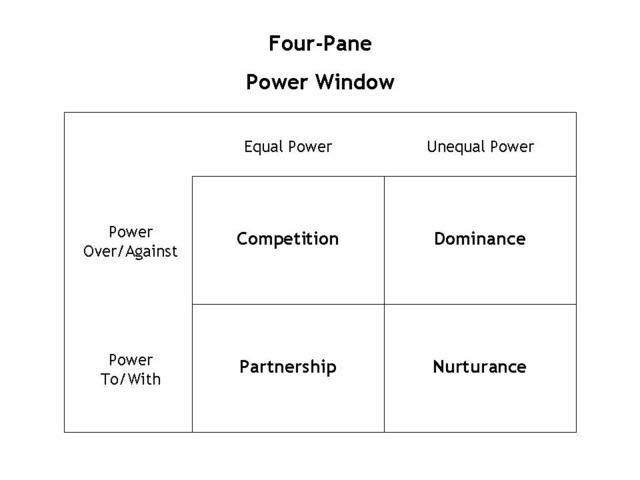
Beyond hubris, what Jarman is describing is someone who went all-in with the power of dominance.

That is the achilles heel of Republicans - because its their go-to mode on a style of leadership. Its also why President Obama's call to remind us of the responsibilities of citizenship (ie, the power of partnership that is the very basis of democracy) is the critical message for today.


Thursday, May 29, 2014

"Without us firing a shot"

In his speech at West Point yesterday, one of the points President Obama made was about the need for the United States to demonstrate leadership by strengthening institutions that provide for international order. As he did in his Nobel Peace Prize acceptance speech, he referred to President Kennedy's call for a peace based upon "a gradual evolution in human institutions." As I've been saying all along, those human institutions are based on the power of partnership rather than the dominance of unilateralism.

To point to the effectiveness of such an approach, the President gave two examples. The first is the global response to Russian incursion into the Ukraine.
In Ukraine, Russia’s recent actions recall the days when Soviet tanks rolled into Eastern Europe. But this isn’t the Cold War. Our ability to shape world opinion helped isolate Russia right away. Because of American leadership, the world immediately condemned Russian actions; Europe and the G7 joined us to impose sanctions; NATO reinforced our commitment to Eastern European allies; the IMF is helping to stabilize Ukraine’s economy; OSCE monitors brought the eyes of the world to unstable parts of Ukraine. And this mobilization of world opinion and international institutions served as a counterweight to Russian propaganda and Russian troops on the border and armed militias in ski masks.

This weekend, Ukrainians voted by the millions. Yesterday, I spoke to their next President. We don’t know how the situation will play out and there will remain grave challenges ahead, but standing with our allies on behalf of international order working with international institutions, has given a chance for the Ukrainian people to choose their future without us firing a shot.
The second was the work that is currently underway to prevent Iran from developing nuclear weapons.
Similarly, despite frequent warnings from the United States and Israel and others, the Iranian nuclear program steadily advanced for years. But at the beginning of my presidency, we built a coalition that imposed sanctions on the Iranian economy, while extending the hand of diplomacy to the Iranian government. And now we have an opportunity to resolve our differences peacefully.

The odds of success are still long, and we reserve all options to prevent Iran from obtaining a nuclear weapon. But for the first time in a decade, we have a very real chance of achieving a breakthrough agreement -- one that is more effective and durable than what we could have achieved through the use of force. And throughout these negotiations, it has been our willingness to work through multilateral channels that kept the world on our side.
Neither situation is completely resolved. But its interesting to note this recent news on the Iranian negotiations.
Iran has neutralized most of its stockpile of higher-grade enriched uranium that could be turned quickly into the core of a nuclear weapon, the U.N. nuclear agency said Friday, leaving the country with only about a fifth of what it would need for such a purpose.

The International Atomic Energy Agency (IAEA) said in a quarterly report that Iran now has less than 90 pounds of the material.

The report also said Tehran was meeting all other obligations under an agreement reached four months ago in Geneva that serves as a prelude to a comprehensive deal now being negotiated.
Both of these situations are demonstrations of how the Obama Doctrine has been successfully implemented:
  1. Articulation of international norms
  2. Development of a global partnership to reinforce those norms via economic pressure
  3. The use of diplomacy to identify a "way out" of that pressure via an appeal to the self-interests of the offending country
Prior to this presidency, our country's foreign policy was mostly limited in these kinds of situations to a response that either ignored the challenge (isolationism) or responded with military intervention. The one big exception to that would be President Kennedy's handling of the Cuban Missile Crisis - when the world stood on the brink of nuclear war.

Demonstrating the power of partnership as an effective tool for U.S. leadership in the world will truly be one of President Obama's most enduring legacies.

Immigrants and domestic migrants could be major factors in the Texas Senate race.

A few weeks ago I wrote about how MAGA influencers are trying to convince their base that - despite Trump's growing disapproval rates -...